Tag Archive for: atm

Cannabis Rescheduled to Schedule III: What It Really Means for Dispensary ATM Operations

On April 22–23, 2026, the DOJ and DEA moved qualifying state-licensed medical cannabis and FDA-approved marijuana products to Schedule III of the Controlled Substances Act. Recreational cannabis remains Schedule I pending a broader DEA hearing scheduled for June 29, 2026. For dispensary ATM operators and Independent ATM Deployers (IADs), the practical effect is this: banking access will improve gradually for medical operators, but FinCEN compliance requirements remain unchanged, cash continues to dominate dispensary transactions, and ATMs stay mission-critical for the foreseeable future. Section 280E tax relief for qualifying operators is the most immediate financial win, freeing cash flow that can be reinvested into store infrastructure — including modern, compliant ATM equipment.

A Historic Federal Shift With Important Fine Print

For more than a decade, cannabis operators have navigated a painful contradiction: legal under state law, but federally classified alongside heroin as a Schedule I controlled substance. That classification made traditional banking nearly impossible, buried operators under punishing tax rules, and kept dispensaries almost entirely dependent on cash.

In April 2026, that contradiction began to unravel. The U.S. Department of Justice and Drug Enforcement Administration issued a final order reclassifying certain cannabis products to Schedule III — a classification that acknowledges accepted medical use and lower abuse potential compared to Schedule I.

But the details matter, and for ATM operators and dispensary owners, the details determine strategy.

Schedule III applies specifically to FDA-approved cannabis-derived products and marijuana covered by a qualifying state medical license. Adult-use recreational cannabis remains Schedule I. A broader DEA hearing set for June 29, 2026, will determine whether rescheduling extends further — but that outcome is not guaranteed, and planning around it would be premature.

What Schedule III Does and Does Not Change for Banking

Banking has always been the cannabis industry’s most stubborn problem. Prior to rescheduling, fewer than 600 U.S. financial institutions served cannabis-related businesses — a fraction of the total banking system — despite the industry generating billions in annual cash transactions.

Schedule III lowers the federal risk classification for qualifying medical operators. That matters to bank compliance officers who weigh regulatory exposure when deciding whether to onboard cannabis clients. This means more financial institutions may begin exploring cannabis banking relationships, particularly for state-licensed medical dispensaries.

However, the core federal compliance framework has not changed. FinCEN’s 2014 guidance governing Bank Secrecy Act expectations for marijuana-related businesses remains fully in effect. Banks that serve cannabis businesses are still required to file Suspicious Activity Reports, known as SARs, and conduct enhanced due diligence on their cannabis clients.

What is a SAR? A Suspicious Activity Report is a mandatory filing that financial institutions submit to the Financial Crimes Enforcement Network (FinCEN) when they identify transactions that appear inconsistent with normal business activity or raise concerns about money laundering. For cannabis businesses, banks file what are called Marijuana Limited SARs for clients operating compliantly under state law. These filings are not accusations. They are documentation tools that help banks demonstrate regulatory compliance while serving a federally sensitive industry.

For ATM operators, clean transaction records are an important part of this compliance ecosystem. Every ATM transaction at a cannabis dispensary contributes to the paper trail that supports a dispensary’s banking relationship and SAR documentation.

The realistic banking timeline: medical dispensary pilots may begin in Q3 2026, with broader rollout extending into 2027 and beyond. Recreational operators should plan for minimal banking relief in the near term.

The ATM Opportunity Window Is Open — Here’s Why

The gap between where banking is today and where it needs to be is exactly where ATMs operate. That gap is not closing overnight.

Dispensaries across the country continue to process the majority of their retail transactions in cash. Customer preferences, privacy concerns, and the persistent scarcity of banking options all contribute to high cash volumes at the point of sale. ATMs placed inside dispensaries serve a direct function: they give cash-preferring customers immediate access to funds, reduce friction at the register, and measurably lift per-visit spending.

For IADs, the rescheduling moment is not a threat; it’s a deployment window. The operators who secure contracts with recreational and hybrid dispensaries now, while banking normalization is still 12 to 24 months away, are the ones who will lock in the most durable revenue positions.

Deployment Priority by Dispensary Type:

Dispensary TypeCash RelianceATM Priority
Recreational OnlyHighestCritical
Hybrid Medical/Adult-UseHighHigh
Medical OnlyModerate, decliningMedium

The math on ATM revenue in this environment remains compelling. Surcharge revenue per transaction, multiplied across daily volume, generates consistent returns with relatively low overhead, especially when using a revenue-share model that eliminates upfront capital costs for the dispensary.

280E Tax Relief: The Reinvestment Effect

For IADs, the most underappreciated implication of Schedule III is its impact on dispensary balance sheets.

Prior to rescheduling, cannabis businesses subject to Schedule I classification could not deduct ordinary business expenses under IRC Section 280E. Rent, payroll, marketing, equipment — none of it was deductible. Effective tax rates in some cases reached 70 percent or higher, starving operators of cash flow and limiting investment in their physical locations.

For qualifying medical operators, Schedule III eliminates the 280E burden. Ordinary business deductions are now available. For a dispensary generating $2 million in annual revenue, this can mean hundreds of thousands of dollars in freed cash flow in the first year alone.

What does a dispensary operator do when cash flow improves? They invest in their store. Better layouts, improved customer experience, expanded hours, and modern equipment, including ATMs. IADs who approach newly profitable medical dispensaries with a strong value proposition are entering the conversation at exactly the right moment.

Recreational operators remain subject to 280E until further rescheduling action. That sustained tax pressure actually reinforces ATM value for those operators: ATMs generate surcharge revenue that flows to the dispensary, partially offsetting operational costs without requiring new capital expenditure.

ATM Compliance: What IADs and Dispensary Owners Must Get Right

This is an area where cutting corners can lead to serious exposure. Cannabis dispensaries already operate under heightened regulatory scrutiny, and ATMs placed in those locations inherit that scrutiny. Compliance is not optional; it’s the foundation of a sustainable deployment.

EMV and PCI DSS Standards

All ATMs deployed in the U.S. are required to support EMV chip card technology. Any late-model ATM will meet this standard as a baseline requirement. The current, actively enforced standard is PCI DSS (Payment Card Industry Data Security Standard), which governs how cardholder data is stored, processed, and transmitted.

PCI DSS compliance requires:

  • Encryption of cardholder data at the point of capture
  • Regular security audits and vulnerability assessments
  • Physical security controls on ATM hardware
  • Documented incident response procedures

A strong recommendation for IADs and dispensary owners: avoid used or refurbished ATMs. Older machines may not meet current PCI DSS requirements, can be difficult to update, and may carry unknown hardware vulnerabilities. Dispensaries seeking to establish or maintain banking relationships cannot afford the compliance risk posed by outdated equipment. A modern, certified ATM also sends a signal to customers and banking partners alike: this is a professionally operated business.

Cash Loading and Vaulting

Dispensaries and IADs are not required to use armored car services to load ATMs. Private ATM vaulting services are a compliant and widely used alternative. The key requirement is that cash handling is documented, consistent, and traceable. Clear records of who loaded the machine, when, and how much support BSA/FinCEN compliance and protect all parties in the event of an audit or inquiry.

What Is Not Compliant

Cashless ATM systems: Devices that process point-of-sale debit transactions disguised as ATM cash withdrawals using a TID intended for a cash-dispensing ATM are a direct violation of Visa network regulations and are subject to huge fines. These systems have been widely used in cannabis dispensaries as a workaround for card acceptance, but they carry serious legal and financial risk. IADs and dispensary owners should avoid these systems entirely.

The Payment Landscape: ATMs, Debit, and the Card Ban That Remains

Understanding where ATMs fit requires understanding the full payment picture inside a dispensary today.

Cash remains the dominant payment method, driven by customer preference, banking gaps, and the simple reality that not every customer carries the right card for compliant debit systems. PIN debit solutions from specialized processors have gained adoption and offer a compliant path for card-preferring customers, but they operate under their own compliance requirements and do not replace the ATM’s functionality.

Credit card acceptance via Visa or Mastercard remains prohibited. Schedule III rescheduling does not change network rules. Acquirers remain liable for processing cannabis transactions on these networks, and no network policy change has been announced. Any processor claiming to offer compliant Visa or Mastercard processing for cannabis should be treated with significant skepticism.

ATMs occupy a clean, well-established compliance lane that none of these alternatives can fully replace. They serve cash customers, generate surcharge revenue, and operate under a compliance framework well understood by regulators, banks, and operators.


How IADs Should Position Now

The operators who will benefit most from this moment are those who move with clarity and speed.

Immediate actions for IADs:

  1. Target recreational and hybrid dispensaries first. These have the highest cash volumes and longest ATM dependency. It will be a long time before recreational cannabis is legal like liquor, if ever.
  2. Lead with compliance credentials. PCI DSS certification, cash handling documentation, and modern equipment
  3. Offer revenue-share structures that eliminate upfront cost objections
  4. Educate dispensary owners on 280E relief and how freed cash flow can fund ATM programs
  5. Build multi-location relationships with MSOs (multi-state operators) for scale

Immediate actions for dispensary owners:

  1. Confirm medical license eligibility for Schedule III banking benefits
  2. Maintain ATM contracts through the banking transition period
  3. Ensure your ATM provider uses current-generation, PCI DSS-compliant equipment
  4. If vaulting, document all cash handling for BSA/FinCEN purposes
  5. Consult a cannabis-specialized CPA on 280E amended returns

Frequently Asked Questions

Does Schedule III rescheduling mean that dispensaries no longer need ATMs?
No. Schedule III applies only to qualifying medical cannabis and does not immediately resolve banking access for the majority of dispensaries. Cash remains the dominant payment method, and ATMs continue to serve a critical operational role while the banking landscape evolves over the next 12–24 months.

Are cashless ATMs a compliant option for dispensaries?
No. Cashless ATM systems that disguise POS debit transactions as ATM withdrawals violate Visa network regulations. They are not a compliant payment solution and carry serious legal and financial risk for both the dispensary and the IAD.

Do dispensaries need armored cars to load ATMs?
No. Private ATM vaulting services are an acceptable and widely used alternative. The requirement is documented, traceable cash handling — not a specific carrier type.

What compliance standards must dispensary ATMs meet?
All deployed ATMs must meet EMV chip card standards and current PCI DSS requirements. IADs should deploy only late-model, certified machines to ensure full compliance. Used or refurbished ATMs may not meet current standards and introduce unnecessary risk.

What is a Suspicious Activity Report and how does it affect ATM operators?
A SAR is a mandatory FinCEN filing that banks use to report potentially suspicious transactions. Dispensary ATMs generate transaction records that support a dispensary’s SAR documentation and banking compliance. Clean, well-maintained ATM records are an asset in any compliance review.

Will Section 280E relief affect ATM demand at dispensaries?
Indirectly, yes. 280E relief frees significant cash flow for qualifying medical operators. That capital is available for store investment — including professional, modern ATM equipment. For IADs, this creates a new opening with medical dispensaries that previously had limited reinvestment capacity.

The Bottom Line for ATM Operators and Dispensary Owners

Schedule III is a meaningful federal shift — the most significant in decades. But it is not a banking solution, a payment solution, or an ATM replacement. It is the beginning of a normalization process that will unfold over years, not months.

For IADs, the window to secure strong, long-term dispensary ATM contracts is open right now. For dispensary owners, the ATM remains one of the most reliable, compliant, and revenue-positive tools available while the industry transitions.

Compliance, modern equipment, and clear documentation are what separate operators who thrive in this environment from those who create liability for themselves and their partners.

Ready to deploy a PCI DSS-compliant ATM in your dispensary or expand your IAD portfolio into cannabis locations? Contact ATM Depot for a free site assessment and revenue analysis.


Published April 27, 2026. Sources: DOJ/DEA Final Order April 2026, FinCEN BSA Guidance, PCI Security Standards Council, Marijuana Policy Project. This article is for informational purposes only and does not constitute legal, tax, or financial advice.

Are ATMs Always Open? How to Operate an ATM 24/7

If you are thinking about starting an ATM business, you might be wondering, Are ATMs always open? The short answer is, Yes and no. You see, each ATM business is different. So, some ATMs are always open—others are not. 

If you want to make money with ATM machines, it is possible to operate an ATM 24/7. Here, we’ll provide an overview of what various business models look like. That way, you can decide for yourself how to proceed with your ATM business.

Are ATMs Always Open?—Not Always

Not all ATMs are always open. For instance, if you’ve ever passed by a store with an illuminated “ATM” sign whose doors were locked, you’ve experienced an ATM that was not open. 

Independent ATM deployers (IADs) have about three options when it comes to installing their ATM machine. They can install it in a business or store front they already own. They can rent space in a mall or plaza to operate their ATM from. Or, they can work in collaboration with an existing store or business that agrees to the installation in exchange for boosted customer service and sales.

So in that respect, an ATM’s availability depends on the location itself. If an ATM machine is installed behind the locked doors of another store or business, that ATM machine is not open 24/7—because customers can’t get to it to use it.

Then there are outdoor ATM machines. For example, ATM machines operated out of parking lots/garages, food truck parks, outlet malls and plazas, and the fronts of convenience stores can offer passers-by 24/7 access to cash and their accounts. However, just because an ATM is accessible doesn’t mean it is functional. An outdoor ATM machine still has to be connected to the networks, has to be stocked with cash, and has to not be out of order to be considered open 24/7.

Are ATMs Always Open?—They Can Be

If you want to operate ATMs 24/7, it’s totally possible. There are simply certain conditions that must be met.

24/7 Location

Although ATMs are technically designed to operate 24/7, the question of are ATMs always open depends on a number of other factors. Namely, it’s up to the owner/operator. If you want to operate your ATM 24/7, you have to find a location that facilitates that.

You can operate an ATM machine 24/7 if it is always physically accessible to customers. For example, you might install your machine in an outdoor location, through the wall of a store facing the street, or just inside the doors of a store that is also open 24/7.

ATMs are designed to operate without human supervision. They include secure cash dispensing and deposit mechanisms, card readers, PIN pads, and network connections to banks and processors. Modern ATMs have features like anti-skimming, surveillance cameras, and internal safes to operate securely 24/7. Basically, you don’t have to sit on site with your ATM to operate your ATM business.

Instead, you can use remote online monitoring to manage your machine. This management system allows you to track cash levels, detect malfunctions or tampering, and receive real-time alerts for any error codes.

Reliable Internet Connection

To operate your ATM 24/7, it needs to be reliably connected to the banking networks (Visa/Plus, Mastercard/Cirrus). This enables ATMs to validate transactions at any time, regardless of location or banking hours. So 24/7 operation requires secure internet connection. If your machine loses internet connection, it will be inoperable until it is reconnected. Until then, you’re out of business.

Little to No Downtime 

In order for your machine to always be open, it has to always be working. This means that if you want to operate your machine 24/7, there has to be no downtime. Your machine will require regular servicing like cash replenishment, error codes, and other preventative maintenance like cleaning and software updates.

Where Are ATMs Always Open? The Best 24/7 Locations

We’ve said a few times that 24/7 ATM operation depends on the location of the installation. But what are your options? If you are looking for a location that facilitates 24/7 ATM operation, you’ll need to find a location like one of the following:

Convenience Stores, Truck Stops, Gas Stations

Convenience stores, truck stops, and gas stations are at the top of the list. They’re often open 24/7, ensuring around-the-clock ATM access. They experience steady customer traffic, especially during off-hours.

Furthermore, these customers have a need for cash. Customers in these locations often make cash-based purchases and therefore have a high tendency of withdrawing cash to shop. 

Finally, indoor placement offers weather protection and enhanced security. It’s better to operate a 24/7 ATM indoors when possible for these reasons.

Hotels and Motels

Guests of hotels and motels (especially budget chains) often need quick access to cash for tips, transport, or nearby restaurants. Lobby ATMs benefit from indoor, secure placement, and front desk staff can monitor the machine and inform guests about the ATM, increasing usage.

Transportation Hubs

Transportation hubs like airports and bus or train stations are also good places to target travelers in need of cash. These locations often experience round-the-clock foot traffic, and the presence of security can deter theft and vandalism.

Liquor Stores and Smoke Shops

Liquor stores and smoke shops are businesses that prefer cash transactions. Customers who want their bad habits to go unnoticed tend to prefer spending cash in these locations, too. This increases the need for cash in these 24/7 locations making ATM service a lucrative opportunity on top of the added benefits of indoor operation.

Laundromats

Laundromats can make good locations, too, due to the need for cash to operate the machines. It is also easier to find gaps in the market—in a laundromat, there’s usually low competition for ATM services nearby.

Bars and Nightclubs

There is high cash usage for drinks, tips, and cover charges at bars and nightclubs. Plus, late-night crowds rely on ATM access when banks are closed. Even if the bar isn’t open 24/7, late-night operation equals strong transaction volume despite being open fewer hours than other locations.

Remember, the best 24/7 locations for ATM installation have high, consistent foot traffic, security, accessibility, and low downtime risk.

Are ATMs Always Open—Yes and No

When it comes to the question of are ATMs always open, the answer really depends on the owner and the location. An ATM cannot operate 24/7 if the owner does not want it to. It also cannot operate 24/7 if it is locked up in a store after hours and therefore inaccessible to customers. 

So, the bottom line is: if you don’t want to be on-call 24/7, don’t make your ATM machine operable after hours. However, if you want to maximize your revenue potential, think about investing in a 24/7 ATM machine that is always open for transactions. 

At the end of the day, the more time your machine is available, the more customers have an opportunity to use it, and the more potential you have to make money. If you’d like to know more about how to own ATMs that are always open, contact us today!

An ATM Business Can Save Your Marriage (It’s Not as Crazy as It Sounds)

The title statement may sound outlandish. But, consider these stats about gray divorce (divorce among couples over 50):

  1. Gray divorce has doubled since 1990.
  2. Gray divorce has increased by 700% since 1960.

Those are startling numbers. And, it probably seems unlikely that an ATM business is the solution. But, if you look at why the gray divorce rate has skyrocketed, it becomes clear how an ATM business can help.
Here’s a quick story to illustrate the most common cause of gray divorce:
A young couple meets, dates, and gets married early in life—shortly after college. For the next few decades, they spend most of their time building careers, raising children, and preparing for retirement. There’s a lot to do, and they’re both happy to be doing it together.
Then it comes time to retire. Suddenly, the shared goals are gone. And the man has dedicated the majority of his life working. He spent very little time building relationships or hobbies. Or maybe both of the people in this couple spent very little time pursuing things other than work.
The struggle is that retired people often find themselves with nothing to do. And, this can severely strain marriages. When all the work is done, it’s easy to feel that there’s no need for a team anymore.
But there’s more: having nothing to do is no fun. Retirement is supposed to be enjoyable—at least as enjoyable as a fulfilling career, if not more enjoyable. So, it’s easy to feel unhappy in retirement.
That’s what’s caused this spike in gray divorce: a lack of shared goals and things to do in retirement.
An ATM business solves that problem.

How an ATM business can save your marriage from gray divorce

Being an ATM owner is not a way to get rich quick. When you start an ATM business, you’re playing the long game. And, this long game affords people opportunities to build relationships and develop a routine that can sustain them throughout retirement.

Older Couple having CoffeeBuilding relationships

One of the most important aspects of owning an ATM business is building a successful route. An ATM route is just the common path you take to refill your ATM machines with cash and ensure they’re in good shape.
The benefit of this ATM route for older people is that it provides a place where you show up regularly and get to know people. Socially, it’s like a bar (but far more productive and profitable).
Additionally, each ATM machine will be located in or near a business, and maybe even a bar if that’s something you’d enjoy. And, you have to develop a relationship with that business owner, because your ATM is on their property. And, these business owners may want to be involved, to some small degree, in the operation of that ATM machine (coupons, promotions, lowered credit card fees for them, etc.).
Developing quality relationships with these landlords, business owners, and property owners is key if you want to have an ATM business that’s all about service. And, your ATM business should be all about service. That will make your business successful and will ensure you keep your customers happy so they’ll stay with you for a long, long, time.
But, more than being an important part of your ATM business, these relationships give you people to do things with once you’ve retired. Your ATM business creates a circle of friends that will last a lifetime.

Productive routines

An ATM business also solves the problem of idle time in retirement.
Once you’ve set up your ATM route, you’ll obviously need to run that route regularly to keep your ATM machines up and running. This creates a routine that helps retain a sense of purpose and offers shared goals for you and your partner.
But, the best thing about the routine of an ATM business is that your routine can be as busy or as minimal as you’d like. If you want, you could work nearly full time in your ATM business. Or, it can be as part-time as you like.
And, you’re not just keeping busy. Your ATM business gives you productive work. It’s even better than a hobby, in many ways.

Reaching retirementOlder Retired Couple Enjoying Retirement Early via the ATM Business

Although this focuses most on how an ATM business can protect you from a gray divorce, an ATM business can also help you stay married until retirement.
As we mentioned earlier, an ATM business is not a get rich quick scheme. It’s a long game.
But, running an ATM business can provide reliable income that doesn’t require you to grind it out day after day. And, it’s income that you can earn in addition to your professional income. So, an ATM business can certainly make it easier to retire when you want to.
And, the additional income of an ATM business gives you time to develop relationships outside of work and build a marriage that’s ready for the realities of retirement. It’s also a business that gets you out of the house which is a big plus for decreasing the chance of a grey divorce. Plus, you get to enjoy any neighborhood you wish to pursue, make connections, and have fun at the same time. 
So, your ATM business isn’t just a marriage failsafe for retirement. It’s also something that can sustain your marriage and life until you reach retirement.
And, what about those who are retired or near retirement right now? You can start an ATM business at any time. Yes, the ATM business is a long game. But, it’s a long game that you can start right now, regardless of where you are in your life. Besides, you can start and ATM business with less than $5,000 and the returns on that money will be much better than the bank and much safer than the stock market. You’re investing in yourself and in your retirement. 
If you’re ready to start now, learn more about starting an ATM business.

ATM Business Basics Part I: How ATMs Work

Running an ATM business is a relatively simple endeavor. However, there’s some ground level knowledge that you need to be a successful ATM owner. A big part of that knowledge base is how ATMs work.
While you don’t need to be an ATM technician (you can always pay one to service your ATMs if you need), it’s important to have basic working knowledge of your ATMs. That way you can identify and solve minor problems, and quickly add cash or refill the receipt paper. This makes your ATM business more efficient in terms of both time and expenses.
So, welcome to our two-part guide that will give you a solid foundation of information on which to build your ATM business. We’ll start with the basics of how ATMs work.

How ATMs work

As the name suggests, an ATM (Automatic Teller Machine) a banking terminal where users can perform a variety of banking activities, depending on the capabilities of the ATM machine itself.
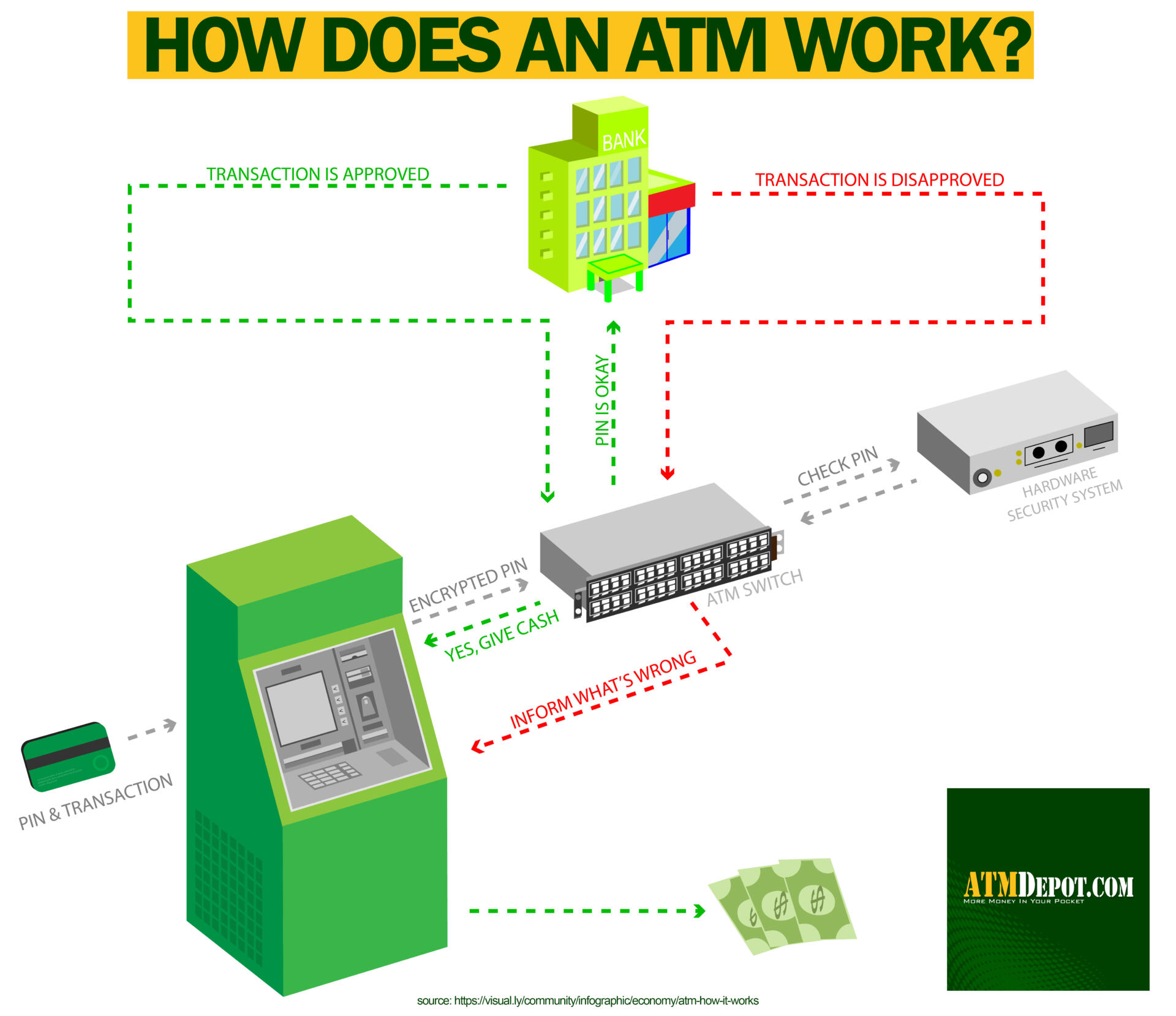
Inserting a debit card or credit card that offers cash advances activates the ATM. The ATM authenticates the debit or credit card using a PIN number, electronically debits the cash amount from the user’s account, and dispenses that withdrawal as cash.
On the backend, the bank reimburses the ATM owner for the cash taken from the ATM, plus a transaction fee, which is paid by the ATM user. This is handled electronically by the ATM processor.
That’s the basic process. These are the parts involved in this process.

The parts of an ATM machineThe Parts of an ATM Infographic

We’ll cover these quickly in two groups: the parts that the user sees, and the parts that you, the ATM owner, need to know.

These are the user-facing parts involved in an ATM transaction:

Display (LCD or LED): The display is where the prompts and instructions are shown to the ATM user. ATM machines are equipped with braille and audio devices (speaker or headphone jack) for blind customers.
Keypad: The keypad is simply a grid of buttons that accepts input from the user. Many ATM machines also have buttons on the sides of the screen for making certain selections
Card reader: This accepts the user’s debit or credit card and reads the information on it.
Cash dispenser: This is where the magic happens. The cash dispenser gives customers their cash. The cash dispenser also checks notes for proper size and thickness and ensures that the correct number of bills are given.
Receipt printer: This part prints the receipt that verifies the transaction, and sometimes shows the user’s account balance.
These are the parts of an ATM that the customer interacts with. You as the ATM owner need to be familiar with these parts. However, the ATM owner also needs to know their way around the internals of an ATM machine, even if they’re not an expert in repairing or replacing those parts.

These are the internal parts of an ATM machine:

ATM mainboard: The mainboard is the central “computer” for the ATM. The CPU, RAM, and connection interfaces for the other components live here.
Power supply: Connects to an external power source and provides power for all the ATM machine components.
Modem: The modem performs all the internet communications required for transaction processing. This can be wired or wireless. It depends on how the ATM connects to the internet.
I/O board: The I/O board is in charge of communicating with the ATM processor, and ensuring that the correct information is sent to the correct parties.
Cassette: The cassette is an important part for the ATM owner. The cassette holds the cash. When you stock an ATM with money, this is where the bills go. The cassette can be fixed or removable. Each type of cassette has pros and cons. Which one you use depends on your business and the ATM location.

How Does an ATM Machine Work?With all the parts covered. Here’s a more detailed look at how an ATM works:
  1. The user activates the ATM by inserting their card.
  2. The customer enters their PIN and selects how much cash they want using the keypad and display.
  3. The mainboard collects the information and sends a unique EMV transaction code to the I/O board.
  4. The I/O board packages up the transaction information for the ATM processor and the modem transmits it to the appropriate ATM processing networksYour card’s supported networks are printed on the back. Every card is required by law to have two accessible networks. The transaction is completed through the secondary network if the first network fails.
  5. The ATM processor sends the withdrawal request to the bank. The bank approves or denies the request. If the transaction is approved, the message is sent back through the ATM processor to the ATM. Then, the selected amount gets debited from the customer’s account. Associated transaction fees are usually paid from the customer’s account.
  6. The modem and I/O board receive the approval. And, the mainboard initiates the cash dispensing. The cash dispenser checks each bill to ensure that it’s the proper size and thickness and that the correct number of notes gets dispensed. Notes that are not the proper size or thickness get sent to the reject bin. This happens occasionally with old or torn bills. The cash dispenser automatically dispenses a different bill any time a note is sent to the reject bin.
  7. The customer takes their cash and has a great day!

Those are the nitty-gritty details of how ATMs work.
It’s helpful to know these fine details as an ATM owner. Being more familiar with the machine helps with basic troubleshooting, and makes life easier if you get technical support over the phone.
However, you should be very familiar with the cassette and user interface. Inspect these each time you restock your ATM. You need to fix your machine ASAP if the user interface is malfunctioning or cash is being dispensed incorrectly. You lose money whenever your ATM isn’t working.
Whenever you fill your ATM with cash, it’s best to perform a transaction to verify that your machine is working correctly.

Front to back

That’s the frontend of an ATM business. In the next part, we’ll talk about what happens on the backend and where all the transaction fees go. Stay tuned. Or learn more about building your own ATM business (and how you make money).
 

[Infographic] Bitcoin Business vs. ATM Business: Fees Explained Simply

Bitcoin. Who hasn’t heard of it? News of this new form of digital currency is sweeping the nation. Every day it seems we hear of someone else making lots of money from blockchain in the Bitcoin Business. Needless to say, it keeps us interested. But, there’s been a pretty big downfall to investing in the currency lately. Transaction fees are becoming quite a problem. In December 2017, a man moving $25 of Bitcoin paid a $16 fee to do so. According to CNBC, people are paying $28 on average to make Bitcoin transactions. The average transaction fee at an ATM machine is currently around $4. Both fees have been increasing, but Bitcoin’s transaction fee is doing so at a significantly higher rate.

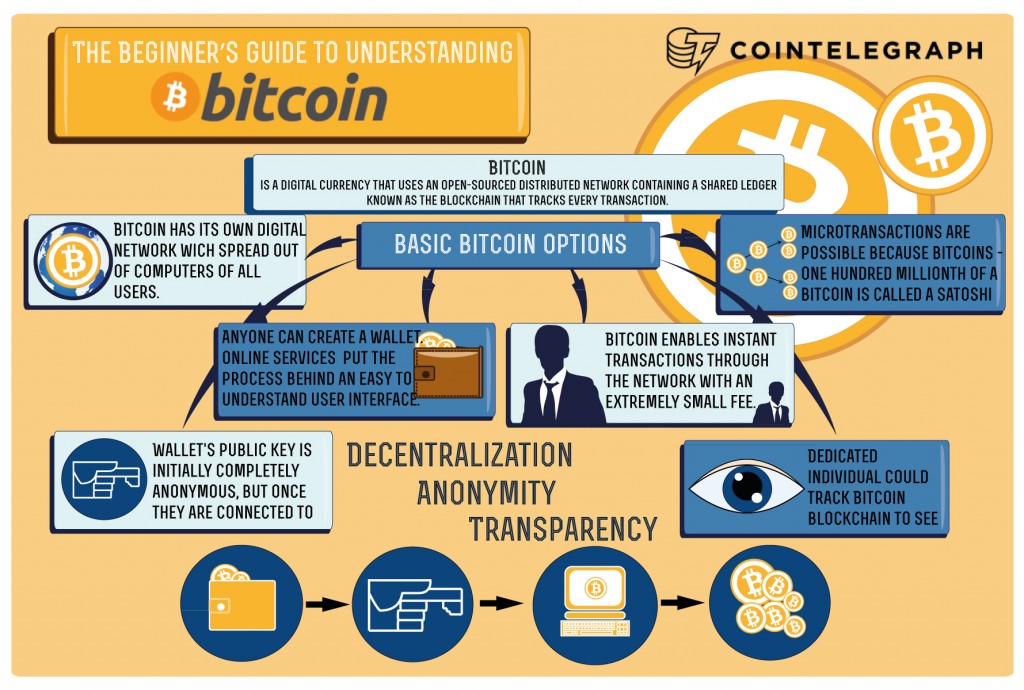
What is Bitcoin?

In its simplest terms, Bitcoin is a digital currency. A cryptocurrency. Created in 2009 by anonymous user Satoshi Nakamoto, the goal was to create a decentralized electronic cash system. Decentralization is one of Bitcoin’s most important characteristics. This means that no single institution controls the bitcoin network. This puts people that don’t like institutions to have control of their money at ease. Another defining difference between common currencies and Bitcoin is pseudonymity. The system does not need to know the identity of any parties involved when Bitcoin is transacted. This anonymity attracts illegal activity which takes up almost half of Bitcoin transactions at the moment.

What is Bitcoin Infographic

Source: http://mompreneurasia.com/wp-content/uploads/2017/06/btc-1024×690.jpg

Transaction Fees in the Bitcoin Business

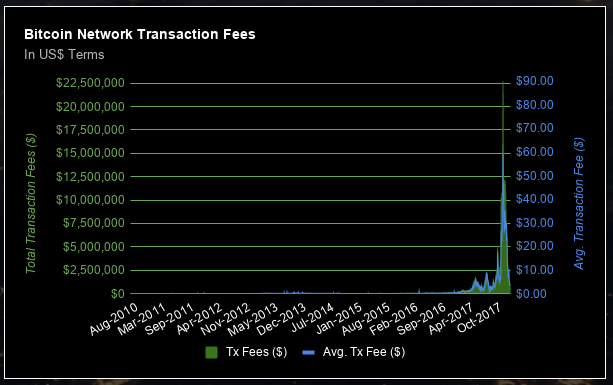
With so many success stories in the media, people are rushing to enter the cryptocurrency business. Transaction fees are usually the first and most visible cost that everyone in the network will experience. With more users joining in, fees are increasing. According to the graph below, transaction fees for Bitcoin in October 2017 total over 22 million dollars. The average transaction fee around that time: around $60.00. The biggest pain point most people in the network have is how much the fees are fluctuating. If you enter the Bitcoin business, it is in your best interest to check www.cryptofees.net daily, or a similar site, to find out the current average transaction fee. The constant variations and shifts keep Bitcoin miners on their toes.

Bitcoin Transaction Fees - Graphic

source: https://web.archive.org/web/20181020203539/https://cryptovoices.com/network-transaction-fees/ (2018)

ATM Business Transaction Fees

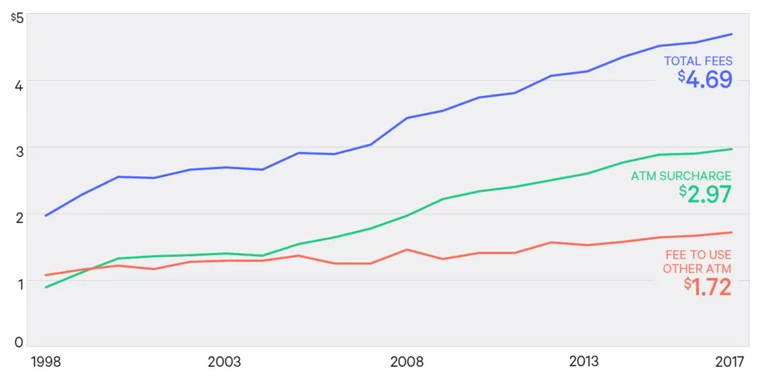
One of the most common fees we encounter every day has been rising as well. ATM surcharges have reached an all-time high. CNBC reports Pittsburgh has the highest current average at $5.19 while San Francisco has one of the lowest at $3.90. The slowly increasing fee ensures Independent ATM Deployers continue to make a good amount of passive income. As averages continue to rise, remember to update your ATM surcharges to ensure you make more money.

Interested in learning more about the ATM Business? You’re in the right place. Don’t leave this page without getting the information you need. Download our FREE ATM Business Guide by clicking the link below.

Download Your Free Guide

ATM Fees Increasing Over Time

source: http://time.com/money/4966816/atm-fees-all-time-high/

TX Fees vs. Surcharge

Although ATM surcharges have been increasing, the fee doesn’t fluctuate as fast as Bitcoin transaction fees. The average annual increase, according to Bankrate 2017, has been 4.7% over the past 19 years. Bitcoin transaction fees are different for each transaction. On this day, the minimum Bitcoin transaction fee charged is recorded at 0.0963%, however, the largest fee recorded is 29.3309%. That’s right. Someone paid $43.00 to send $103.61. Good thing we don’t have to pay a percentage to withdraw money from an ATM.

The average ATM surcharge has been increasing lately, but it’ll be a while before it’s equal to that of Bitcoin. Most people are wondering whether getting into the Bitcoin business would be beneficial. The answer is … probably. If you’re wondering whether getting into the ATM business is profitable, the answer is yes. IADs are racking up on these surcharges that happen to increase each year. You may have to check daily what you’ll pay to transfer Bitcoin, but surcharges don’t usually change on a daily basis. The ATM business is a lot more secure and reliable, however, the Bitcoin business is definitely booming. We’ve created this infographic to help illustrate the difference between bitcoin fees and ATM surcharges.

Bitcoin Business vs ATM Business Fees

[Infographic] The Bitcoin Business vs The ATM Business Fees

How to Profit from the ATM Business - Free Guide