Tag Archive for: business owners

First Steps to Creating a Business—ATM-Style

A quick Google search or AI prompt will provide you with a list of some general first steps to creating a business. These steps might vary slightly based on the type of business you want to start. However, you’ll find that even an ATM business fits the mold when it comes to basic business startup.

In this article, we’ll introduce some of the most basic, general first steps to creating a business and adapt them for the ATM industry. That way, you can see how similar starting an ATM business is to any other business. Then, we’ll cover some specifics that are unique to an ATM business. When it’s all said and done, you’ll know the first steps to take to get into business in the ATM industry.

First Steps to Creating a Business—Adapted for ATMs

Creating a business involves several critical steps to move from an idea to a functioning operation. Here’s a practical breakdown of the first steps for most businesses:

1. Define Your Idea

What’s your product or service? Clearly describe what you’re offering and the problem it solves. 


As an independent ATM deployer (IAD), you’re buying or leasing ATMs, placing them in high-traffic locations, and earning revenue from surcharges users pay per transaction. You offer customers access to their bank accounts. For stores and businesses, you enhance their customer service, increase foot traffic and impulse purchases, save them money on credit card processing fees, and possibly offer an extra revenue stream.

Who is your target customer? Identify your ideal market or audience. 


As an IAD, you’re looking for locations that have a need for ATM service. Small businesses, convenience stores, bars, salons, gas stations, or events without existing ATMs are good places to start.

What is your revenue model? 


As the owner and operator of an ATM machine, your revenue comes from the surcharge fee. This is the transaction fee for using your machine and is typically $2.50–$3.50 per use. You might also possibly profit-share with business owners hosting the machine

2. Conduct Market Research

Who are your competitors? Look at businesses doing similar work and see how yours can stand out. 


For an ATM business, you want to find gaps in the market. Installing an ATM machine in a location that already has convenient access nearby is going to affect your earning potential. If there are other ATMs nearby, you want to offer a competitive surcharge rate to pull more customers from other machines with higher fees. 

When searching for a location to operate your ATM from, you might find that a store or business is already working with an ATM service provider. This can be a good opportunity to discover whether or not they are happy with the service they are receiving. If they aren’t, explain how you can solve that pain point

Is there demand?


Find out the potential of a location by scoping out locations in person, having conversations with location owners, and conducting online research. Visiting locations can give you a sense of how busy a location is—the busier the better. Conversations with location owners can reveal their motivations or objections which can tell you a lot about a location’s potential. And online research can provide you with a map of potential competing locations and customer reviews. 

3. Create a Business Plan

A basic business plan should include a summary of what your business is and what it will do. It might also include market analysis, a marketing and sales strategy, organization and management structure, and financial projections like basic budget and expected revenue/costs. 


A simple business plan for an ATM business might look something like this:

  • Start-up costs (ATM purchase/lease, cash to stock the machine, installation, etc.)
  • Monthly operating expenses (maintenance, communication line, armored cash refill if outsourced)
  • Expected transactions per month and projected income
  • Growth strategy (e.g., 3 machines in Year 1, 5+ in Year 2)

4. Choose a Business Structure

There are three common types of business structures: sole proprietorship, limited liability company (LLC), and corporation (C-Corp or S-Corp). All can work for an ATM business, but the most common route is sole proprietorship

While a sole proprietorship is simple, there is no legal separation from you and your business. An LLC, on the other hand, protects personal assets. Choose LLC for liability protection, tax flexibility, and to separate your personal and business finances. Finally, corporations are more complex and are more appropriate for large businesses or raising capital.

5. Register Your Business

Choose a business name after checking its availability in your state. Register it with your state government. Apply for an Employer Identification Number (EIN) with the IRS for tax and payroll purposes. 


With a sole proprietorship, you can operate under your own name or a fictitious business name, a DBA—doing business as. You may not need an EIN under a sole proprietorship, but you will if you establish an LLC. Check out Forbes’s side-by-side comparison of the best LLC filing services.

Get required licenses or permits (varies by industry and location). Set up a business bank account. Consider business insurance (especially liability or workers’ comp if hiring). 


For an ATM business, you will need a business bank account. This is where ATM surcharge profits will be deposited and where your vault cash will be settled for you to withdraw to refill the machine. You may have two business bank accounts: one for your surcharge revenue and one for vault cash.

You will also need an ATM processor agreement. This is documentation of your partnership with an ATM processing company that will handle the communication between networks and transactions.

Insurance is optional unless the location owner requires it as part of the placement deal. However, it is a good idea to invest in general liability insurance to protect your equipment and liability.

7. Set Up Operations

Location: Decide whether you’ll operate online, from home, or at a physical location.

Website: Create a basic site or landing page.

Systems: Pick tools for accounting, invoicing, communication, etc. 


With an ATM, you will probably operate out of someone else’s store, business, or other location. However, you can also rent a space in a shopping center or similar area. 

There are many ways to establish an online presence as an ATM business owner. This can be a good way to get location owners coming to you to set up placements which saves you the time spent approaching them. You can create a website if you want, but sometimes a simple social media page can be effective. 

You can also get a custom web page designed and featured on an already high-ranking website in, say, an “ATM providers near me” web directory. Borrow their search engine optimization to increase your own visibility, credibility, and lead generation.

And tools and resources you can use to help manage your finances, track profits, and record expenses include accounting software tools like QuickBooks, Wave, or Xero. You will also have access to remote online monitoring that offers reporting tools you can use to monitor transaction reports for performance insights.

Unique First Steps to Creating a Business in the ATM Industry

There are some general first steps to creating a business. These apply to almost any business, ATMs not excluded. We’ve adapted them for your convenience so that you know exactly how to apply each step to starting an ATM business. Now, it’s time to get into some specifics those basic first steps to creating a business didn’t cover:

1. Purchase Your ATM(s)

To operate an ATM business, you need to purchase the equipment. You can buy new or refurbished machines (costs range $2,000–$4,000 each). Make sure you choose EMV-compliant and ADA-compliant models that support remote monitoring and cash alerts.

2. Secure Locations and Contracts

Most IADs secure locations and contracts with existing businesses. Approach business owners and offer free machine installation and maintenance for a monthly rent (flat fee) or revenue-sharing (e.g., 30% of fees). Be sure to draft, agree on, and sign a placement agreement with each location that outlines the responsibilities of each party.

3. Stock and Monitor Your Machines

You can load cash yourself to save on armored truck service. While this adds another $2,000 or so to your startup budget, it is typically more cost effective in the long run. Install remote monitoring software to track cash levels, errors, and transactions. That way, you can manage your business off-site.

3. Market and Scale

Create a simple web page to establish credibility, generate leads, and open lines of communication. Create business cards and/or flyers to leave with  more locations and leads. Consider adding more ATMs to your route as your revenue grows.

Now You Know the First Steps to Creating a Business ATM-Style

Now that you know the first steps to creating a business in the ATM industry, you can decide for yourself whether or not it’s really for you. If you’re still on the fence, remember that an ATM business offers benefits most other businesses do not: low overhead, little to no real estate costs, no employees, flexibility, and simplicity. What other job can you think of that makes you money while you’re doing something else altogether?

If you have questions or want to know more about the first steps to creating a business in the ATM industry, contact us today! With decades of experience, ATMDepot has worked with thousands of IADs just like you. It’s our mission to help anyone earn semi-passive income from operating ATM machines.


7 Benefits of Starting a Business

Starting a business can be scary, especially if you don’t have prior experience or formal training and education. However, none of that is really necessary to experience the benefits of starting a business. 

Now, not all businesses are created equal. Each has its own challenges. But the personal benefits each business owner earns from their business makes them uniquely qualified—they love doing it!

Here, we’ll list some benefits of starting a business you can experience. And, if you want to start now, see if our list of ATM business benefits appeals to you. If it is, we make it easy for you to get started today!

7 Benefits of Starting a Business

There are some benefits that many self-owned businesses share. These are the reasons more and more people are going into business for themselves:

1. Independence and Control

One of the biggest benefits of starting a business is the independence and control you experience. When you think about it, this kind of covers half of the benefits in this list. As the boss, you get to call the shots. You can make your business look the way you want it to. You can hire out the tasks you don’t enjoy while focusing on the ones you do. Most importantly, you don’t have anyone to report to.

2. Job Security

Independence and control are closely tied to a sense of job security. With no boss, you don’t have to worry about being let go or demoted. You control the success of your business and create opportunities that generate the revenue to keep going.

3. Financial Potential

Money is probably one of the most important benefits of starting a business. People start businesses to make money. Whether it’s to live a comfortable lifestyle, provide for a family, or generate a side income, everyone hopes to be financially compensated for their efforts. 

So while you control your own job security in your own business, you also control your financial potential. You will analyze things that are working and things that aren’t and make the necessary adjustments to reach your financial goals. Based on your success and resources, you can even scale your business when appropriate. Scaling comes with more work, but it also comes with a higher reward.

4. Flexibility

Flexibility is important to a lot of business owners. And, as your own boss, you have more flexibility than you would working for someone else. You can design your business around your lifestyle. Whether you want to spend more time with your family, travel more, work other jobs, pursue hobbies, etc., you set your working hours.

5. Skill Development

Since starting your own business doesn’t necessarily require any specific experience, training, or education, many new business owners encounter a lot of on-the-job learning. As a first-time business owner, you will develop both hard and soft skills that will benefit you in other areas of your life as well.

Hard skills are teachable and measurable. They might include things like financial management, marketing and sales, strategic planning, and technical skills. 

Soft skills are more behavioral, emotional, and interpersonal. You will have to practice time management, leadership, team management, communication, problem solving, adaptability, etc. 

You might already be good at some of these things, but others might be new. The point is that, as a business owner, you don’t just grow financially, you grow professionally, too. And these skills are transferable, so you never have to feel stuck.

6. Networking Opportunities

Networking is one of the key benefits of starting a business because it naturally expands your personal and professional connections in ways that can lead to growth, learning, and opportunity. (And it’s a soft skill…). 

Meeting other entrepreneurs, potential partners, mentors, and even investors offers access to more opportunities that might not be available in a traditional job. It can also help you learn and succeed faster, gaining insights from others’ experiences. What worked? What failed? And what strategies might you try yourself?

Networking can be good for your business by boosting your reputation and increasing referrals and recommendations. And you may find chances to collaborate on projects, bundle services with another business, or form strategic partnerships that benefit both sides.

7. Community Involvement

Networking also helps you increase your community involvement. But community involvement is one of the benefits of starting a business in and of itself. Community involvement is a valuable benefit of starting a small business because it fosters meaningful connections and long-term support.

When you engage with your community—through sponsorships, events, or local partnerships—people are more likely to support your business out of trust and shared values. Being seen as a business that “gives back” builds goodwill and enhances your reputation, which can influence buying decisions and word-of-mouth referrals. 

And many entrepreneurs find meaning in making a direct, positive impact in the place they live and work. This isn’t something as easily achieved in larger corporate environments.

Benefits of Starting a Business in the ATM Industry

Now that you know some of the benefits of starting a business, maybe you’re ready to do it. An ATM business is a good place to start for many reasons.

First, operations are simple. All you need is a location, a machine, a processing company, a bank account, and cash. You don’t need to worry about hiring or managing employees. Your technical knowledge is basically limited to the ATM machine operation. And you’ll have minimal customer service needs.

Second, overhead costs are low. You don’t have to purchase real estate, rent a storefront, pay utilities, or furnish an office. Just purchase an ATM machine and provide the vault cash.

And of course, one of the biggest benefits of starting a business in the ATM industry is its side hustle potential. An ATM business provides a semi-passive income stream offering you the flexibility to manage your business around your schedule, hobbies, other jobs, etc. An ATM machine does not require you to be on site except to refill and maintain the equipment. So, you essentially make money while you sleep or do literally anything else.

If you want to take your business from side hustle to full-time, you also have that option. An ATM business is completely scalable, allowing you to make as much money as you have bandwidth.

Are You Ready to Reap the Benefits of Starting a Business?

Now that you know what starting a business has to offer, do you think it’s for you? If it is, you can get started today. An ATM business might be that step you need to take the plunge into your dream business. Or, it could just be a way to generate some capital. Who knows? Your business goals could begin and end with ATMs! Most importantly, you can start an ATM business without disrupting your current lifestyle. It’s that simple. Check out our free ATM Business Start-Up Kit today to begin reaping the benefits of starting a business.

Do You Have Seasonal Allergies or Is It Just a Cold?

I’m the pill popper in our office. Don’t worry, it’s not like I’m on all sorts of medications. I take vitamins and supplements to stave off Seasonal Allergies and Cold Season.
What’s the difference between an allergy and cold symptoms?

Allergies Diagram

The differences and similarities between allergies and a common cold.

Seasonal Allergies

Fall allergy triggers typically include different weed pollens. Damp leaves that start to get moldy also trigger mold allergies. That’s why my so many folks rake their yard each fall. Except those of us in California desert where we don’t have leaves that fall or much yard for that matter.
When your body encounters these triggers, your immune system treats pollen or mold as the invader which produces antibodies to defend your body. This is what causes our stuffy nose and/or headache, sneezing, itchy eyes, and coughing.
What’s more, as we get older our immune system gets weaker. In fact, a weaker immune response can also reduce allergic reactions. According to Dr. Richard Lockey at the University of South Florida, since more folks are now healthier later in life, he’s seen plenty of 80-year-olds still “having symptoms or developing new allergies.” That’s typically why so many of us say “I never had allergies growing up”.

Want to practice good allergy “hygiene” to keep sniffles at bay this time of year?

For starters, use a HEPA air filter in your bedroom. Keep one in the bedroom and clean the filter once a week. It filters out mold, pollen, and other allergy triggers.

  • Keep windows and doors closed during higher-pollen times. You can check pollen counts through Weather.com’s Allergy Tracker or Pollen.com.
  • If you are outside all day, jump in a shower and change clothes when you return home.
  • Try to avoid going outside on dry, windy days, especially when the pollen count is high and it’s blowing all over the place.
  • Try to exercise later in the day, pollen counts are highest in the morning.

A Neti Pot can also cut down on seasonal allergies, if you’ve never heard of one, check them out here. It’s an old Hindu device used to wash the sinuses and works great but be sure to follow the directions and use only distilled water and the proper salt additive designed for its use.

Seasonal Allergies

This image shows the four most common seasonal allergies.

Colds

The drop in temperature this time of year is the perfect temp for viruses to attack. There are about 200 different viruses that cause colds, however, the majority of us get sick from just the one called rhinovirus (aka, the common cold). No, it has nothing to do with Rhinos.
According to a study published in Proceedings of the National Academy of Sciences of the United States of America, the chilly air weakens your body’s defenses. So, the lower the outdoor temps, the weaker our bodies’ response is to a virus. Which means we are less able to resist the rhinovirus.
My mother was a health nut in the 70’s before it was the in thing. She’d tell me that the only two supplements to help with a cold are zinc and vitamin C. You need to pound them when you first feel a cold starting.
Here’s why: Supposedly, Zinc strengthens the body’s “T-cells,” which fight off invading bacteria and viruses in the body. Vitamin C, an antioxidant, can reduce symptoms of a common cold within hours if the dose is high (I take 1,000 mg daily but 5000 mg of a powder for rapid absorption per day for 2 – 3 days when I feel a cold coming on or a tickle in my throat). This is meants to help combat inflammation and regulate blood flow. Of course, you can get vitamin C through proper diet like citrus fruits (oranges, grapefruit, etc), green, red, & yellow peppers, and broccoli, but not in the amount you need to fight off a cold.
When my son had a sore throat last winter he was miserable. I tried to get him to take 3,000 mg of Vitamin C but that’s a tough one for a teenager. His cough got so bad he couldn’t sleep and I was so desperate that I tried several different cough remedies and formulas. This one was the only thing that helped him sleep through the night.
Vitamin C also helps your body absorb iron, which is needed to carry oxygen via red blood cells through your bod. This is the central element in the hemoglobin molecule.
Studies found in the Cochrane Library, one of the most prestigious database systems, evaluated many trials involving vitamin C and the common cold. They found taking higher doses of vitamin C cut the duration and severity of common cold symptoms.

Other Tips

Other tips can include:

  • Getting exercise
  • Washing your hands more frequently
  • Avoid sharing of drinks or utensils
  • Don’t eat food or touch your eyes or mouth after touching things in public areas (door knobs, doors, countertops, items when shopping, money, etc).

Zinc is also a known supplement that helps reduce the duration of the cold virus.
Obviously, If a cold turns into the flu or you don’t start feeling better 3 – 5 days out, please seek out your doctor. Antibiotics won’t help knock out a cold virus. If there’s something else going on, your doctor would know best.
Boosting your immune system now can cut down on symptoms and complications should you get sick or suffer from seasonal allergies.

How To Ensure You Profit From Your ATM

Ensure You Profit From Your ATM

So you have an ATM, but do you even know if you’re making any real profit? Some ATM operators consider the additional money spent in their location as profit but you may want to know the actual profit from the machine.

Do not become a business owner that buys an ATM and never calculates whether or not profits are being made. That’s no way to run a business. It’s a good idea to figure out how much you make a month and year so that you know the value of your investment.

When you don’t feel like you’re making as much profit as possible then you may want to consider ways to get more people to withdraw cash from your ATM. There are a few things you can do to encourage more customers to use your ATM.

How Much was the ATM?

Using the cost of the machine and how much profit you make from it monthly you can quickly see your ROI (your return on investment). Most business owners simply pay cash or use a credit card to finance the ATM (they aren’t that expensive anymore) so calculating ROI is fairly straight forward. While you can take advantage of depreciation and amortization as a piece of business equipment, you should also calculate how long it actually takes to recoup your investment.  We’ve seen busy ATM’s have an ROI of less than 1 month, while slower machines can take 6 – 12 months, which is still a fantastic ROI.

When you figure out how long it is going to take to pay off what you paid for the machine (your ROI) you’ll get a better understanding of when you will make a real profit. It should not take longer than a year to pay off what you invested to get the machine. Most business owners are able to pay off or recoup the investment in the ATM within a year.

Big factors include how much business you generate and the location of your machine. Make sure that your ATM is in a place people can easily find it. Consider putting your machine near the front of your store so people will be more likely to come in and use it if they need quick cash and don’t forget to load the ATM everyday.

How Much Does It Cost to Operate an ATM?

The factors that add to the operational cost of an ATM include communication (phone, internet or an ATM wireless device), a little electricity, and paper for the receipts.  All this added together is probably less than $0.85 per day.

Are you Keeping Track of the Money Going In and Out of Your ATM?

Most retail business ATM operators load cash daily similar to a cash register. So you should balance daily if you can. Otherwise, you can use the trial cassette close functions and online balance functions to track or count the money in the machine daily if possible. Whenever you or someone else loads the machine make your you have procedures in place to keep track of the funds. If you trust someone to load the ATM for you, be sure they keep a ledger or journal and make sure funds balance. This helps keep track of the money to ensure that you are not losing or missing any cash. Some people are tempted to think you’ll never miss a $20 bill here or there, so the last thing you want to realize is that someone you trust has been stealing a $20 here or there for a few months. Twenty dollars here and there might go unnoticed but it could add up.

You should be able to trust your employees but caution is always good to practice. Use the printer balance functions and put the receipts in envelopes and balance to the online system whenever you load or do your closeouts.

Are You Advertising that You Have an ATM?

A few signs, one for inside the store and a couple to put outside can make a big difference. Make your ATM very easy to find once people get inside. Post a big sign outside that reads “ATM Inside” so that people will know if they need cash all they have to do is walk into your store. Place another sign in close proximity to your store that notifies people there is an ATM within walking distance. A small investment into signs can go a long way and help you generate a lot of more profits on a weekly basis.

Another way to generate more ATM usage is to offer specials or coupons on the ATM receipt.  Most of the late model ATM machines make it easy to offer your customers extra value for using the ATM. If you have coupons in other publications, advertise those. You can also make deals with neighboring stores to advertise their store on your ATM if they advertise your store. You can also offer a coupon good for a special during their next visit.  There are lots of other ways to make your ATM more profitable. Want more tips on how to profit from your ATM, give us a call.

Advertisements Vs. ATM Fees

Advertisements Vs. ATM Fees

ATM fees are just one of those touchy subjects that can make even the meekest of personalities take a turn and show a wild side. That could be mainly because ATM fees vary so widely from one ATM owner to the next and from one financial institution to the next. This can make it virtually impossible sometimes to get a reasonable grip on what’s fair to outrageous to pay. Of course, for the customer, fees are about paying the lowest amount as possible. But for the ATM owner, fees are an integral part of doing business, so while there is a desire to be reasonable, they must also stay competitive in the market just to stay on level with other ATM institutions.

Creative Advertising

While assessing ATM fees are certainly an important part of doing business, they’re not always welcomed or embraced by customers. There can be a lot of complaining about the rates, and even requests for refunds from customers who may decide to challenge the fee amounts based on several criteria. At any rate, the ATM owner has to become creative at ways to keep his customers happy enough to continue doing business with his establishment. And, at the same time, the owner must try to develop a workable solution that will keep a crucial and much-needed revenue stream coming into his financial business.

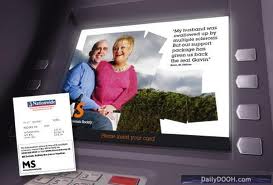
ATM advertising is a possible solution that owners can implement that may help to solve some of the customers concerns. It’s an on-screen video message where the customer agrees to watch a pre-recorded advertising message in return for reduced or an elimination of ATM surcharges. The customer is given this option when they begin making their transaction, so there are no worries that the commercial will just simply “play” for them, without their permission. Infringement on a customer’s time in that way can be annoying, so ATM owners want to be sure be aware of that possibility and offer the customers options.

With this type of marketing and advertising, both the customer and the ATM owner are appeased on different levels; the advertiser for agreeing to play the advertising video compensates the ATM owner, and the customer (possibly) pays a significantly reduced bank fee in exchange for watching the advertiser’s sales pitch. The sales pitch usually won’t take any longer to view than it would to make an ATM transaction, so there is no lengthy, inordinate amount of time spent watching video commercials while standing at the ATM machine. Usually, the ads will be anywhere from 10-30 seconds, just enough time to capture the customer’s attention and make a lasting sales impression.

The ATM owner and the advertiser will work out and negotiate the terms of the advertising contract. They will determine how long, how frequently and what style of commercial is best suited for the machines. Varying factors can determine ad costs, which is why negotiation is crucial. Since this type of advertising is vastly different from print or even television advertising, it’s important to look at the overall marketing package in terms of quality, relevance and style and not just length. For instance, in some cases, the advertiser will need to negotiate the rate based on the length of the commercial, whether it’s 10 seconds or 60 seconds, especially if it’s for a well-known product or brand.

Coupons and More Savings

Another feature that gets the customers attention is the tear-off coupon that’s at the bottom of their banking receipt. These receipts are good for other services or products that are with local businesses in the area, encouraging customers to keep their business with local establishments. This also incentivizes the business owners to place ads with the ATM machines, especially if they’re trying to target a certain demographic or entice the foot traffic that surrounds the area where the ATM is located.

What makes these types of transactions so worthwhile is because the advertisements are targeted specifically to ATM-style audiences, so it’s something (a product or a service) that would interest the customer. The customer does however have the option to “opt-out” of the feature and choose to not watch the videos. If the customer does go this route, they usually will have to agree to pay the ATM fees.