Tag Archive for: atm processing

How to Read an ATM Processing Statement: Transactions, Surcharges, and Deposits Explained

You open your ATM processing statement and stare at three different numbers that all look like money.

Settlement deposit. Surcharge income. Cash dispensed.

Your first instinct is they should all add up to something that makes sense. They don’t. And now you’re either confused about what the ATM actually made, or you’re assuming something’s wrong with the numbers.

Here’s what’s actually happening. Some of that money isn’t revenue. It’s vault cash cycling through the machine and coming back out the other side.

Once you know the difference, reading your statement stops being a guessing game.

What Does an ATM Processing Statement Actually Show?

Your ATM processing statement shows transaction activity, settlement, surcharge revenue, and whatever else your processor includes. But you don’t need most of it.

Here’s what you’re actually looking for.

Successful withdrawals. Focus on that number when you’re calculating surcharge revenue. Not declines. Not inquiries. Successful withdrawals where customers actually received cash.

Surcharge revenue. The fee you charged for that withdrawal. Multiply successful surchargeable withdrawals by your surcharge rate, and you can estimate your gross surcharge revenue before any applicable splits, fees, reversals, or adjustments.

Settlement. This is where people get confused. Settlement is dispensed vault cash coming back to your designated account. If customers withdraw $18,600 from the ATM, that’s what shows up in your settlement activity, based on your processor’s settlement term. It’s not new income. It’s your working capital recycling. This is based on the settlement time in the processor time zone.

Everything else- reversals, adjustments, merchant splits, and network fees- are the exceptions. Look at them after you understand the three numbers above.

Here’s why this matters. Settlement and surcharge are completely different money.

If customers withdraw $18,600 and that generates $900 in surcharge, you’ve got:

$18,600 in settlement (vault cash cycling back); $900 in surcharge revenue (actual income from the machine)

Treat them like separate buckets, and keep them in separate bank accounts. Your vault cash account should be different than your income account. Don’t add them together. Don’t confuse one for the other. They’re doing different jobs.

Settlement is your working cash cycling back; try not to use it for anything else. It will make vault cash accounting much simpler. Surcharge is the revenue your ATM generated and is your company’s gross profit.

Why Might Your Deposit Be Different From the Surcharge Total? 

You calculated $1,330 in surcharge revenue based on 380 withdrawals at $3.50 each.

But the deposit that hit your account was $1,280.

Now you’re wondering if something’s wrong, or if your processor is taking a cut you didn’t know about.

Stop and check your processing agreement first.

Merchant or partner splits. Did you agree to share part of the surcharge with the location owner? That could be why your payment is lower than your gross surcharge calculation. If you agreed to a merchant split and had your ATM provider handle it so you don’t have to send checks or do the accounting, that will reduce the surcharge revenue you receive.

Network fees. Certain card networks like Visa, MasterCard, and NYCE charge per-transaction fees on surcharged withdrawals. Some ATM vendors pass through these fees. Whether those fees affect your payout depends on your processing arrangement, so check your statement and agreement to see what applies. 

Interchange. Some processing arrangements pass through interchange income on certain transactions, and it can often be tied to transaction volume tiers, buy rates, or other factors. It varies by ATM vendor, your setup, and whether you pay for certain support, onboarding, or other services per diem, so ask your ATM provider directly if you don’t know. 

Reversals, adjustments, and chargebacks. A transaction that was approved may have been reversed later, disputed, declined on settlement, or corrected. That shows up on your statement and reduces your final number.

Fallback transactions happen when the EMV chip on the card used doesn’t read properly, your card reader is dirty, or something interrupts the EMV chip reader, and the ATM uses the old magnetic stripe on the back of the card to authenticate the transaction. Fallback fees are passed through to the ATM owner. Keep your card reader clean to reduce the chances of these charges.

With ATMDepot.com processing, we don’t retain a percentage of the surcharge you set. Some network fees may apply depending on the transaction type and processor. If you’re seeing fees from your ATM provider or processor you don’t recognize, call and ask them. The point is this. Gross surcharge and net deposit are not the same thing. Understanding why they’re different is more important than assuming something went wrong.

When you see a gap between what you calculated and what landed in your account, open your statement and find the line item that explains it. Usually it’s there. If it isn’t, call your processor with specific questions about the numbers.

What ATM Settlement Means on Your Statement

This is where most operators get lost.

You stock the ATM with $5,000 in vault cash. Over the weeks between loadings, customers withdraw $3,800. That $3,800 goes back to your settlement account, and the remaining $1,200 is still sitting in the machine. None of it is new revenue. It’s your own working capital cycling through.

With ATMDepot processing, vault cash settles the next banking business day. Weekends, banking holidays, cutoff times, and ACH processing can affect when the funds show up in your account. That’s important because it means your working capital cycles quickly. You can reload the machine without waiting a week for funds to show up. Understanding how ATM processing works behind the scenes helps explain why settlement timing matters.

That’s why settlement and surcharge need to stay separate.

Settlement equals vault cash cycling. Surcharge equals actual income.

Settlement timing also matters for practical reasons. If you’re loading an ATM on Friday afternoon and don’t see settlement until the following Tuesday, you need to know that. Plan your vault cash accordingly. Don’t assume Friday’s activity settled over the weekend just because the days have passed. NACHA rules tie ACH settlement strictly to banking days, meaning days the Fed is open, since all ATM settlement funds go through the Fed via ACH. 

Use your settlement report and settlement date to match activity with deposits. That’s where the confusion usually comes from.  If there is a difference, don’t forget to account for funds in transition (funds withdrawn between settlement times and days). Those funds aren’t in the bank yet and aren’t in the ATM.

How to Use Your ATM Statement to Track Location Performance

Most operators check their statement once a month to make sure money showed up. That’s the minimum. But your statement can do more.

Pull up last month’s report. Look at successful withdrawals. Then pull this month-to-date report and compare.

Suppose this ATM normally does 350 withdrawals a month. Then it drops to 320. Then 260. Then 190.

One slower month may not tell you much. But if the numbers keep moving in the same direction, something may be changing or if it’s off for just one week or a day, something is wrong..

Maybe the location’s ISP went down, and you’re not using a wireless device. Maybe the ATM got unplugged or has an error. If it’s been trending lower, maybe traffic at the location changed. Maybe another ATM opened nearby. Maybe the machine has been running low on cash more often, and customers are going somewhere else. Maybe downtime increased, and people stopped trusting it.

The statement won’t tell you the why. But it tells you something shifted. And that’s worth investigating.

Here’s how you actually do this.

Step 1: Pull the terminal ID and location. 

Step 2: Find successful withdrawals and cash dispensed. 

Step 3: Calculate expected surcharge: successful withdrawals times your surcharge rate. 

Step 4: Compare settlement activity with cash dispensed. If something looks off, check the dates, reversals, and adjustments before assuming there’s a problem

Step 5: Look for any reversals, adjustments, or splits that explain the gap. 

Step 6: Compare this month to last month. Same withdrawals? More? Less?

If volume is dropping, reach out to the merchant. Maybe they know something. Maybe the machine needs maintenance. Maybe it’s just a slow month. But you don’t know until you ask.

Same thing if volume is climbing. A growing location might need more vault cash or a different loading schedule so it doesn’t run empty during peak times. Understanding placement agreements helps you structure these conversations with merchants and plan future equipment and cash needs.

That’s when your processing statement becomes more than a reconciliation document. It becomes a tool for actually managing your route.

If you have access to a processing portal, like ATMDepot’s online reporting, don’t wait for the monthly statement. Check real-time transaction data weekly. You’ll spot trends faster and catch problems before they become expensive. Check to ensure your machine is up and running properly. Look at your transaction history. Do you see more reversals, denials, fallback transactions, or something that doesn’t look right? Use this information to figure out what maintenance might be necessary.

ATM Processing Statement Example: What the Numbers Mean

Here’s a concrete example so you know exactly what to look for.

Machine in a busy location.

  • Successful withdrawals: 380 
  • Cash dispensed: $21,000 
  • Total transactions: 425 (includes 30 declines, 15 balance inquiries) 
  • Surcharge rate: $3.50 
  • Gross surcharge revenue: $1,330 (380 times $3.50) 
  • Settlement: $21,000 
  • Merchant split: 20% of surcharge equals $266 
  • Surcharge after merchant split: $1,064 

That’s what you need to know. Everything else in the statement is supporting detail.

The machine completed 380 surchargeable withdrawals. Customers withdrew $21,000. You charged $3.50 per transaction and generated $1,330. After the merchant’s 20% split, $1,064 in surcharge revenue remains in this example. Fees or reversals could still adjust that number, which is normal and worth checking against your statement. 

That $21,000 in settlement is vault cash, not revenue. It cycles back so you can reload and keep the machine operating.

Now look at the breakdown.

30 customers’ cards declined. That happens. Don’t worry about one declined transaction. If declines start increasing, then it’s worth checking into.

15 people checked their balance without withdrawing. They’re not generating surcharges, but they’re using the machine. Which means traffic is there.

Do the math. Simple. No confusion.

Frequently Asked Questions

What’s the difference between my gross surcharge and what actually hits my account?

Gross surcharge is what you calculated. What hits your account is gross surcharge minus whatever else applies to your arrangement: merchant splits, network fees, reversals, or adjustments. Check your processing agreement first. The answer is almost always there.

How quickly can I expect to see settlement in my bank account?

With ATMDepot.com processing, vault cash settles the next banking business day. That timing matters because you can reload the machine faster. But watch your cutoff times and banking days. A Friday withdrawal may not settle until Monday or Tuesday depending on when the transaction cleared and when your bank processes ACH.

Should I worry about a few declined transactions?

No. Declined transactions happen. Especially if you see the same card trying over and over. Then you might see the same card do a balance inquiry.  One or two don’t tell you anything. But if declines are climbing month over month, check the card reader and next time you load and clean it to see if that helps. It could also be a connectivity issue or an old card reader that needs a firmware update or just cleaning.

My ATM volume dropped. What should I do?

First, confirm the drop is real by comparing two consecutive months. If it’s a trend, reach out to the merchant. Maybe traffic changed, maybe there’s another ATM nearby, maybe the machine needs service. The statement shows you what changed. It doesn’t explain why. You have to investigate.

TL;DR: How to Read an ATM Processing Statement

Your ATM statement is not complicated once you know which numbers matter.

Settlement is vault cash cycling back to your account. Surcharge is revenue generated from surchargeable withdrawals. Don’t confuse the two. Multiply successful surchargeable withdrawals by your surcharge rate to calculate your gross surcharge revenue. From there, merchant splits, network fees, reversals, adjustments, and your processing arrangement can affect the amount you ultimately receive. 

Check your statement once a month. Compare it to last month. Look for trends in withdrawals, cash dispensed, and surcharge revenue. If something dropped or climbed, investigate. The statement shows you what changed. Your job is to figure out why.

If you’re new to the ATM business and want to understand the bigger picture beyond statement reading, start with our ATM Business Training Membership. You get access to training videos, member-only equipment pricing, a professional location finder system, and resources built for operators who want to do this right.

Want to talk through your processing setup, understand your current statement better, or explore what ATMDepot.com can do for your route? Call 888-959-2269. We’re here to help you make sense of the numbers and build a business that actually works.

ATM Processing vs. Merchant Processing: What’s the Difference?

If you operate ATMs or run an independent route, you’ve probably heard both terms: ATM processing and merchant processing. They sound like they’re the same thing. They’re not. And that difference matters to your bottom line.

The Quick Difference

ATM Processing: Handles ATM withdrawals, transaction authorization, settlement, and ATM-specific reporting.

Merchant Processing: Handles credit and debit card payments for point-of-sale (POS) purchases.

One supports cash withdrawals. The other supports retail purchases. Different transaction types. Different requirements.

What Is ATM Processing?

ATM processing is the system that enables cash withdrawals. When a customer inserts their card, the ATM processor handles the technical side: authorizing the transaction, routing it to their bank, approving or denying the request, and coordinating settlement of funds back into your account.

The processor is the middleman between your machine and the networks and banking system. They provide the network connection, handle transaction data, coordinate settlement, and give you access to reporting.

What Is Merchant Processing?

Merchant processing is completely different. It handles credit and debit card transactions for purchases. Typically at the register or point of sale. When a customer swipes a card to buy a product or service, the merchant processor steps in.

The merchant processor routes the transaction to payment networks, authorizes it, and settles funds into your account. The merchant processor handles purchases. The ATM processor handles cash withdrawals.

Why This Actually Matters

These aren’t just two different services with different names. They affect your costs, settlement timing, compliance, and how much control you have over your operation. ATM processing works around surcharge economics. Merchant processing follows a different pricing model. Depending on the program, that may include percentage-based pricing, per-transaction fees, cost-plus pricing, or a cash-discount structure. They’re built on different models, which is why mixing them up costs you money.

Processing Fees and Revenue Structure

ATM processing is built around surcharges. You charge customers a fee per withdrawal (typically $1.50– $5.00 depending on location). According to Bankrate’s 2025 study, the average ATM surcharge nationally is $3.22 per transaction. The surcharge fee is often kept by the ATM owner and operator. The cash loader, aka vaulter if not the owner, would also require a split of the surcharge. Depending on the agreement, the retailer may also get a split of the surcharge after the owner and vaulter costs are calculated. 

Some ATM processors, including ATMDepot, offer 100% surcharge payout with no monthly processing fees, though network fees may apply for those purchasing and operating the ATM themselves. Placement programs differ depending on location..

Merchant processing works differently. Pricing depends on the program and may include percentage-based fees, per-transaction charges, cost-plus pricing, cash-discount pricing, or other structures. Those models are designed around purchases, not ATM withdrawals. 

Here’s why: Your revenue model is based on surcharges, which are fixed amounts. An ATM processing program should reflect that reality, not be priced like retail transactions. That’s why ATM withdrawals need a processing program built specifically around ATM transactions.

They Follow Different Processing Rules

ATM withdrawals and retail purchases are different types of transactions, so each needs to be set up through the appropriate processing service. That’s another reason not to treat ATM processing and merchant processing as interchangeable. Configure your ATM processing for ATM transactions, and your merchant processing account for card purchases.

If one company provides both services, that’s fine. The important part is that each transaction is handled through the right program.

Settlement and Cash Management

ATM processors settle on ATM-specific timelines. With ATMDepot processing, vault cash withdrawn from the machine is settled back to your designated bank account the next banking business day. That matters because you need those funds available to keep recycling cash through your machines. What matters is predictability. You know when the money hits your account.

Merchant processing has its own settlement terms for retail purchases. The important thing is understanding the settlement schedule for each service and how it affects your operation.

For an operator, timing matters. You need to know reliably when funds will be available so you can plan vault cash and cash-loading schedules. That’s why ATM transactions need ATM-specific processing, even if the processor also handles your merchant services.

Your Relationship With the Processor

An ATM processor who specializes in ATM operations understands the business. Surcharges, compliance, revenue models, location challenges. When something goes wrong, you want someone who understands ATM operations, not someone who needs you to explain the business before they can help.

Where People Get Confused

The confusion usually starts with the word “processing.” Both services use it, so they sound interchangeable. They’re not.

If you have an ATM and a POS system in the same location, it’s easy to assume both types of processing work the same way. But they don’t. The ATM dispenses cash. The POS accepts payment. Different transaction types. Different economics. Different settlement. Different reporting.

One company can provide both services. What matters is keeping the services themselves separate and using the right setup for each transaction type.

Can One Processor Handle Both?

Yes. A company can offer both ATM and merchant processing. What matters is understanding they’re still separate services with different transaction types, pricing structures, settlement needs, and reporting.

Before committing, ask some clarifying questions:

Are ATM and retail transactions on separate agreements?  Yes, they should be. Find out if they’re bundled under one fee structure or kept separate with their own terms.

What are the settlement timelines? Ask whether your settlement happens on ATM schedules, merchant schedules, or independently.

Who handles ATM issues? When something goes wrong, do you reach an ATM specialist or a generalist support team?

Who handles ATM-specific setup and network requirements? If there’s a problem with your ATM processing, will you be talking to someone who understands ATM operations? 

If a processor can answer those questions clearly and actually separate ATM from merchant processing, you’re in good shape. Most operators find more value working with specialists who focus on what you actually do.

What ATM Operators Actually Need From a Processor

Reliable settlement — You know when funds arrive, consistently.

Clear processing terms — You understand how settlement, surcharge payouts, network fees, and reporting work. 

Appropriate fee structure — Fees designed for ATM surcharge revenue.

ATM expertise — When you call, you’re talking to someone who understands the business.

Transaction monitoring — They catch problems early.

Operational support — They understand vault cash, cash loading, placement arrangements, and the day-to-day realities of operating ATMs. 

Not every processor offers all of this. Specialists know what actually matters to your bottom line.

How to Choose the Right Processing Partner

When you’re evaluating a processor, here are the questions that matter:

Do they specialize in ATM operations? Find out if they focus on ATM processing specifically or treat it as one product among many. Specialists know the nuances. Generalists often don’t.

Can they explain their fee structure clearly? A good processor walks you through exactly how they charge for ATM transactions and why their pricing makes sense for your revenue model.

Do they understand ATM placements? If you’re placing ATMs in merchant locations, your processing partner should understand that the merchant, ATM owner, cash loader, and servicer aren’t always the same person. 

Have they worked in your industry? If you’re in cannabis dispensaries, hospitality, or another specialized space, experience matters. Ask for references from operators in your vertical.

What’s their track record? Talk to other ATM operators in your region. Reputation travels fast in this business.

The right processor understands your business model from day one. The right processor understands the ATM side of your business and knows how it differs from retail payment processing.

Frequently Asked Questions About ATM Processing

Can the same processor handle both ATM and merchant processing?

Yes. ATMDepot.com does. The key is that ATM withdrawals and merchant purchases remain separate processing services, with the right setup for each type of transaction processed.

Do I need merchant processing if I already have ATM processing?

Only if you also want to accept card payments for purchases. ATM processing runs the ATM. Merchant processing handles payments through a POS system or other merchant-payment setup. If you’re only running an ATM, you only need ATM processing.

How often does ATM settlement happen?

It depends on your processor and agreement. ATM processors offer various settlement schedules. The key is knowing your timeline upfront so you can plan cash loading predictably.

What should I look for in an ATM processor?

Look for ATM specialization, clear fee explanations, placement program experience, industry expertise in your vertical, and reputation with other operators.

Can I switch ATM processors?

Yes. If your current processing setup no longer fits your business, you can switch processors. ATMDepot.com can move compatible existing machines to its various processing platforms, and there are no long-term contracts for ATMDepot processing. If you want to switch between the four different processing providers, ATMDepot.com handles that completely. 
Does ATMDepot.com offer equipment with an NFC reader for tap-to-withdraw from ATMs?  Yes, absolutely. Tap to pay is growing, but not all tap-to-pay is the same. We specialize in this, so if you want to dig into the details and understand it, we’ve laid it all out in this article on ATM NFC Readers.

TLDR; The Bottom Line

ATM processing is one of those parts of the business you don’t think much about when everything works. But when settlement is late, reporting is confusing, or you can’t reach support, your processor becomes pretty important.

We’ve worked with ATM owners and independent deployers since 2002, providing ATM processing, equipment, reporting, and operator support. We also offer merchant processing.

ATM processing handles withdrawals. Merchant processing handles purchases. They’re different services, but you can have support for both from a company that understands the difference.

If you’re starting an ATM business, evaluating your current processing setup, or looking for ways to grow your route, explore ATMDepot membership options. Members can access ATM business training, member-only equipment and processing pricing, and additional resources designed for ATM operators.

You can also call 888-959-2269 to talk with us about your ATM processing options.

Tag Archive for: atm processing

Need an ATM – We Can Help

Need an ATM? – We Can Help.
Have an ATM? – We Can Pay You More, Up to 110%!

ATMDepot offers an assortment of ATMs to fit your needs.

Full Service ATM Provider.

Free ATM Placements, ATM Sales, & ATM Processing 

Our pricing for ATM Equipment and Processing is Simple.

  • No Sales Agents
  • No Middlemen
  • No Monthly Fee
  • No Statement Fee
  • No Processing charges
  • Fee online web reporting
  • No Fee’s to Connect to ATM networks
  • We pay you up to 110%

Nationwide ATM Services
ATM Processing, Training, Installation.
24/7/365 Toll Free Support.

Want to earn more? Let us show you what we have to offer.  Call us today at 888-959-2269

ATMDepot.com offers a complete array of ATM equipment and carries a full line of Triton, Hyosund, Tranax / Hantle, GenMega and most other ATM Machines. An ATM Machine purchase is not required to receive up to 110% ATM processing services. If you already own ATM equipment and would like to earn more money, contact us today.

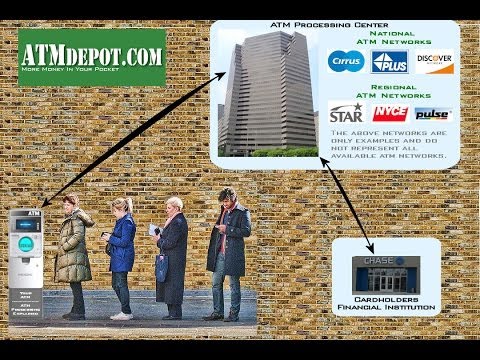
ATM Processing Explained

ATM Processing Explained

Whether you already have ATM Processing or are just starting in the ATM Business and you’re looking for an ATM Processing Company, ATM Depot can help. We’ll unlock the secrets of ATM Processing so you can be successful with your ATM machines.

ATM Depot specializes in ATM Processing, Sales, Service, and IAD Support.

There is no magic to processing ATM transactions or running your own ATM Business. It’s all about the numbers and we’re here to support you. Give us a call and we’ll let you know if we think you have a good location.

We can also help you figure out what you can expect to make from ATM processing with your Machine.

Video Courtesy of ATMDepot.com | Subscribe to Our Channel

ATM Processing Connectivity Options

When ATMs first became popular in retail stores, they handled transactions via a standard analog dial-up operation. This connection uses a phone line. However, most ATMs now come equipped with an RJ45 jack to communicate via the Internet. This makes the ATM ready for Ethernet connections to an ISP (Internet Service Provider) for processing.

With cellular device pricing and monthly fees coming way down, we now offer ATM wireless service at unbeatable pricing. This way, your ATM communications are in your control and not the location’s control. This gives you maximum uptime. Wireless service makes the need for a phone line or relying on a slow or intermittent merchant internet service a thing of the past.

  • Our new wireless system gives you remote capability for any ATM anywhere. Now you can turn most late model ATM Machines into a Mobile Cash Machine. For example, you can install an ATM in an enclosed trailer (ask us to tell you how) to bring them to fairs and weekend events. You can set up an ATM Machine where phone service was previously unavailable. Ask us if wireless device services are available in your area.

ATM Machine Ethernet Connectivity

An Ethernet connection on ATM machines also allows retailers with reliable Internet service to process ATM transactions without adding a phone line or an ATM wireless device. As a result, this saves the additional monthly phone line expense. Processing internet transactions usually take under 8 seconds. This is fast compared to processing phone line transactions. A phone line transaction can typically take at least 20 seconds to complete before the machine dispenses cash. In short, internet transactions are a great option for busy ATM locations as long as the ISP and connection are reliable.

ATMS THAT CAN PROCESS WITH ATM DEPOT

The typical ATMs you see in retail stores, hotels, restaurants, night clubs and all over the US are (mostly) Free Standing ATM Machines. All Free Standing ATM Machines can be set up with ATM Depot as your atm processing company. Regardless of where you purchased your equipment ATM Depot can still handle the transactions on your ATM.

Some of the popular brands from the late 1990s through today have been:

  • Hyosung Halo II – one of the most popular late model ATM’s
  • Nautilus Hyosung – (ATM Equipment and processing available)
  • GenMega (ATM Equipment and processing available)
  • Triton ATM Machines – (ATM Equipment and processing available)
  • Tranax (formerly Cross), Now owned by Hantle Manufacturing and called Hantle ATM – (ATM Equipment and processing available)
  • WRG ATM Machines – (ATM processing available for certain models)
  • Tidel ATM Machines – (no processing available, no longer compliant, purchased by NCR)
  • NCR Discontinued the product line
  • Do not buy used Tidel ATMs as they are no longer compliant

If you have an ATM and would like to switch your ATM processing to ATMDepot.com contact us today. You’ll receive the same 365-day support that we’ve been providing our IAD’s and retail customers since 2003. Switching your processing is fast, easy and free.

If you’re an IAD interested in getting started in the ATM business, the fastest way to get started is by downloading our free PDF. If you are a retailer and need immediate assistance call us at 888-959-2269. Similarly, you can complete our inquiry form and we will contact you the next business day.

ACCOUNTING AND MANAGEMENT REPORTING

Our ATM processing center operates an extensive settlement and accounting system that assures prompt, accurate delivery of funds to the owner of the machine. The system also includes detailed monthly processing reports. In other words, processing reports show down to the transaction level on a daily basis via the Internet.

You will also be able to log in to a secure area to see your transactions, balances, and more in real-time. A separate monthly merchant statement is also sent electronically at no additional charge. Also, the statement breaks down all the processing details for the month.

The management reporting and residual accounting for all transaction processing is able to support multiple-party revenue sharing among merchants and other business partners when needed. To clarify, if you have one or more ATMs processing transactions and you need to pay more than one person or entity from the income, we can do that for you at no additional charge.

Real-Time ATM Processing Company with Online Monitoring Included

Our ATM Portal provides fast and convenient access to real-time ATM transaction information. This online information delivery tool, created exclusively for our customers, is all available 24 x 7 365. Via a secure real-time monitoring link, all ATMDepot.com customers can now enjoy seeing live processing information. In conclusion, you can view daily and monthly terminal reports, view real-time transaction processing, review and research inquiries, and download processing data into customized reports.