Tag Archive for: atm fees

What Is a Surcharge-Free ATM? How It Works and Who Pays the Fee 

ATM fees hit another record high in 2025. What catches people off guard isn’t the surcharge itself. It’s finding out they still got charged after using a machine that was supposed to be free.

According to Bankrate’s 2025 Checking Account and ATM Fee Study, the average surcharge reached $3.22, a record for the fourth consecutive year. Add in what your own bank might charge, and the average total cost of a single out-of-network withdrawal climbed to $4.86.

We’ve been in the ATM business since 1994 and have helped place thousands of machines across the U.S. through ATMDepot.com.. In our experience, the surcharge confusion catches more first-time cash users off guard than almost any other ATM issue. 

Here’s how the fee structure works, who pays, and what to watch for.

What “Surcharge-Free” Actually Means

A surcharge-free ATM is a machine where the owner has waived the fee, blocked the fee due to an arrangement with a financial institution or 3rd party, or runs on a surcharge-free network like MoneyPass, for example.  They would normally charge you for the withdrawal. It doesn’t mean the transaction is free.

When you use an ATM that isn’t owned by your bank, the owner of that machine typically charges you a fee for using it. Think of it like a vending machine: someone bought it, keeps it stocked with their own cash, and maintains it. That fee is called a surcharge, and it goes directly to the ATM owner for lending you their money while they wait to get reimbursed by your bank.

Surcharge-free simply means that fee has been waived for you or someone else is paying it. You may also see it called a fee-free ATM or no-surcharge ATM. Same thing.

Here’s where things get confusing. There are two separate fees that can show up when you use an out-of-network ATM:

Fee 1. ATM owner’s surcharge. This is what the machine owner collects from cardholders who aren’t their customers.

Fee 2. Your bank’s out-of-network fee. Sometimes called a foreign fee, charged by your own bank for using a machine outside their network.

Two different fees. Two different parties.

Surcharge-free only eliminates the first one. Your bank’s fee is a separate matter entirely and depends on your specific account and your bank’s policies. So surcharge-free doesn’t automatically mean the withdrawal is free. It means one of the two possible fees is off the table, which is still real money, especially as surcharges keep climbing.

How Surcharge-Free ATMs Work

The whole system runs on what’s called a network participation model, and once you understand it, the “who pays” question starts to make sense.

Banks, credit unions, and other financial institutions pay to join large ATM networks like Allpoint, MoneyPass, or CO-OP. By joining, they give their cardholders surcharge-free access to ATMs in that network. That’s what in-network ATM access means in practice. The ATM owner still gets compensated, just through the network rather than directly from you at the machine. Think of it as a membership arrangement. Your bank covers the cost, so you don’t see a surcharge at the machine.

Here’s how each fee shakes out under that arrangement:

Fee 1, the ATM owner surcharge, is covered by the network agreement. You don’t see it at all.

Fee 2, your bank’s out-of-network fee, still depends on your account. The national average for this fee is $1.64, according to the Bankrate 2025 study. Whether it applies to you depends on your bank’s specific policies.

Who Actually Pays?

The fee doesn’t disappear. It just moves.

For your bank or credit union: they pay participation fees to be in the network. This is often structured as a monthly fee, a per-transaction cost, or both. It’s their way of offering surcharge-free access as a competitive perk, and it works because ATM fee waivers matter when people choose where to bank.  Some banks also reimburse a limited number of out-of-network fees. Cash App and SoFi, like many internet financial institutions, do this. 

For the ATM operator: independent operators in surcharge-free networks may receive interchange income from the network instead of a surcharge from the cardholder. The revenue structure is different, and volume is what makes it work. A machine doing 10 to 15 transactions a day at a $3.00 surcharge generates real income. That same machine inside a surcharge-free network needs the transaction volume to justify the interchange rate it’s getting. We’ve seen operators join surcharge-free arrangements at busy retail locations and do just fine. We’ve also seen the same setup struggle at a low-traffic spot where the volume isn’t there. The fee doesn’t disappear. The arrangement just changes who covers it. Some ATM Operators choose to charge a very low surcharge in order to attract users and offer an inexpensive convenience. This can often be seen in nail salons and barbershops where tipping in cash is appreciated and the cost of accepting a credit card is getting expensive for the retailer.

The Major Surcharge-Free ATM Networks

A few major networks handle most surcharge-free ATM access across the U.S.

Allpoint is the world’s largest retail-based surcharge-free network, with about 55,000 ATMs globally and around 40,000 in the United States. You’ll find them at Target, CVS, Walgreens, Costco, Wawa, Speedway, and Kroger-affiliated stores. Major bank participants include Ally Bank, Capital One, Chime, USAA, and Charles Schwab.

MoneyPass operates between 40,000 and 61,000 surcharge-free ATMs across the country, with a strong presence at 7-Eleven locations. Fiserv acquired MoneyPass in 2019, and through its member institutions, more than 95 million consumers have access to the network. Independent Operators sometimes choose to offer this network if their processor allows it to attract more users.

CO-OP is built specifically for credit union members and includes around 30,000 ATMs at credit unions and select retail locations nationwide.

Smaller regional networks like SUM also serve community banks and credit unions in specific areas.

Finding these ATMs is straightforward. Your bank’s mobile app usually has a built-in locator that highlights in-network machines near you. Allpoint, MoneyPass, and CO-OP also have their own locators.

When a Surcharge-Free ATM Might Still Have a Fee

Surcharge-free networks save people money every day. A few things will still catch you off guard, though.

Your bank may have its own fee. Even at a surcharge-free ATM, your bank might charge a separate out-of-network fee. If that applies to your account, you’ll still see a charge, just from your bank rather than the machine. Check your account disclosures.

Network mismatches happen. Not every card works at every surcharge-free network. If your bank participates in Allpoint but the ATM you’re using is part of CO-OP, the surcharge-free benefit may not apply. Know which network your bank belongs to.

Prepaid cards vary. Some prepaid debit cards participate in surcharge-free networks, and some don’t. Check the card’s terms and fee schedule rather than assuming the network logo on an ATM means you’re in the clear.

International use has its own rules. Allpoint has ATMs in Canada, the UK, Australia, and Mexico. But even if the ATM doesn’t surcharge you, your bank may still apply a foreign transaction fee. Those are bank-side costs, not ATM-side costs.

Check your bank’s out-of-network fee policy before you assume you’re covered. Know both numbers: what the ATM charges and what your bank charges. That’s your real cost. If you use an ATM only occasionally, the convenience and small fee often outweigh the time it takes to find a surcharge-free machine.

Why ATM Surcharges Keep Rising

If it feels like ATM fees go up every year, that’s because they have. The average ATM surcharge hit $3.22 in 2025, a record for the fourth year in a row, and the total average cost of an out-of-network withdrawal reached $4.86, up from $4.77 in 2024.

The reason comes down to fixed costs and declining usage.

An ATM has real operating expenses regardless of how many people use it: the machine itself, maintenance, receipt paper, communication lines, insurance, and often vault cash management. Americans made 6 billion ATM cash withdrawals in 2009, but that dropped to 5.8 billion by 2015 and 3.7 billion in 2021, according to the Federal Reserve 2022 Payments Study. As that volume shrinks, those fixed costs get spread across fewer transactions per machine. When the math changes, operators adjust the surcharge to keep the numbers working.

We’ve watched this play out across our own network of machines over the past two decades. Locations that were profitable at a $2.50 surcharge ten years ago often need $3.00 or more today just to cover the same costs. The machine costs are real, and they don’t go away just because transaction volume does. Cash still matters, and people continue to use it, which is why the business remains viable even at increased costs.. Digital payments and credit cards are tracked, and some people prefer to have some transactions remain private. 

According to the Bankrate 2025 study, Atlanta had the highest average total ATM fee among major metros at $5.33, while Boston came in lowest at $4.37.

This is part of why surcharge-free networks have become more valuable over time. When a bank invests in network membership, it’s saving its customers real money on every qualifying withdrawal.

What This Means If You’re Thinking About the ATM Business

Here’s how most operators actually make money: the surcharge. Every time someone who isn’t a customer of that machine’s bank pulls cash, the operator collects a fee. That fee covers the machine, maintenance, and cash loading; what’s left is income. Surcharges typically run $2.50 to $4.00 depending on location and market, but we’ve seen everything from $1.00 at a nail salon trying to drive foot traffic to $5.00 at a busy bar where convenience is the whole point. We even implement a percentage-based surcharge when warranted.

Based on placements we’ve managed through ATMDepot.com, the locations that consistently outperform expectations share one trait: foot traffic that was already there before the ATM arrived. A busy convenience store, a packed laundromat, a high-volume liquor store. The ATM captures transactions that would have happened anyway. That’s the model that works.

Operators inside surcharge-free networks can sometimes earn through interchange instead of a direct cardholder surcharge. The math can still work, but volume is what holds it together. A low-traffic location inside a surcharge-free network is a tough business. A high-traffic one can work fine. Know your numbers before you commit. Tourist and international destinations often work well.

There’s also the vault cash side to consider. Whether a machine is surcharge or interchange-based, the operator still needs to keep it funded. Our guide on how much vault cash an ATM operator needs covers what that looks like in practice.

The Bottom Line

Surcharge-free saves you one fee. Not both. In 2025, that one fee averaged $3.22, so it’s real money worth avoiding if you’re an avid ATM user. If you are an occasional ATM user, the convenience is often the factor and reason for using a specific ATM..

Before you assume a withdrawal is free, get both numbers: what the ATM charges and what your bank charges. Those are two separate questions with two separate answers.

If you’re pulling cash more than two or three times a month, either visit your own bank if possible or find a bank that offers Allpoint or MoneyPass, or one that reimburses out-of-network fees. Several online banks and credit unions do both. That setup is what makes ATM fees disappear.

If you’re thinking about placing an ATM at your location, getting into the ATM business, or want to understand how surcharge and interchange revenue actually works before you commit, explore ATMDepot membership options. Members get access to ATM business training, member-only equipment and processing pricing, and resources built specifically for ATM operators.

You can also call 888-959-2269 to talk through your options with us directly.

TL;DR

  • A surcharge-free ATM means the machine owner isn’t charging you a fee for the withdrawal.
  • “Surcharge-free” doesn’t always mean the transaction is completely free. Two separate fees can apply to any out-of-network withdrawal, and surcharge-free only eliminates one.
  • Your own bank may still charge a separate out-of-network fee, averaging $1.64 nationally (Bankrate, 2025 Checking Account and ATM Fee Study).
  • The biggest surcharge-free networks are Allpoint (55,000+ ATMs), MoneyPass (40,000 to 61,000 ATMs), and CO-OP (around 30,000 ATMs).
  • ATM surcharges hit a record $3.22 in 2025, driven by rising fixed costs and declining cash usage.

Frequently Asked Questions About Surcharge-Free ATMs

Does surcharge-free mean the ATM is completely free to use?

Not always, and this is where most people get surprised. Two separate fees can apply: the ATM owner’s surcharge and your bank’s out-of-network fee. Surcharge-free kills the first one. Your bank’s fee is a separate question entirely. Check your account disclosures to see whether it applies to you.

What’s the difference between the ATM surcharge and my bank’s out-of-network fee?

They’re two separate charges from two separate parties. The surcharge goes to the ATM owner. The out-of-network fee goes to your bank for routing a transaction outside their network. Surcharge-free eliminates the ATM owner’s fee. Your bank’s fee depends entirely on your account type.

Which banks offer surcharge-free ATM access?

Banks and credit unions that participate in Allpoint, MoneyPass, or CO-OP give cardholders surcharge-free access to those networks. Common examples include SoFi, Ally Bank, Capital One, Chime, USAA, and Charles Schwab (Allpoint). Many credit unions participate in CO-OP. Some online banks also reimburse out-of-network fees in addition to network participation.

Can you avoid ATM fees completely?

Yes, but you need the right bank. Look for one that’s in Allpoint or MoneyPass and also waives or reimburses its own out-of-network fee. Several online banks and credit unions do both in certain programs; check with SoFi and Cash App. If you’re pulling cash regularly and still paying fees, consider switching banks.

Do all ATM operators charge the same surcharge?

No. The national average was $3.22 in 2025, but that number means very little for any individual machine. A casino ATM might charge $5.00 or more. A neighborhood convenience store might be $2.50. Operators set their own rates based on location, foot traffic, and what the market will bear.

Can a business owner set up a surcharge-free ATM?

Yes, but get the numbers first. Surcharge-free machines may earn through interchange instead of a direct fee, so the revenue depends entirely on how much traffic your location already has. A busy spot can make it work, but sometimes a lower surcharge like $1.00 or $1.50 makes it seem like a great deal and it will get used much more often. A slow one usually can’t but sometimes lowering the surcharge can help it get noticed as a convenient value.. Talk to an ATM company that will look at your actual location before you commit.

Does Cash App Charge ATM Fees?

With over 50 million users, Cash App is one of the most popular mobile payment apps. It allows users to send money, make payments, and invest. It’s especially popular with lower-income adults and young people, making ATM fees an important consideration for users on a tight budget. 

You can use a Cash App Cash Card at an ATM. But since it’s not tied to a bank account, you might be interested to know how this affects ATM fees: does Cash App charge ATM fees? Keep reading to find out more about how to use Cash App with ATMs.

ATM Fees Explained

Generally, when you use your debit card at an ATM, you will be charged two fees: one by your bank and one by the ATM owner. If you use an in-network ATM, you are only charged one fee since your bank owns that ATM. 

Some banks offer different fee structures and waive certain fees as a benefit of purchasing certain accounts. Check with your bank for more information on ATM fees for your account.

Cash App isn’t a bank, though. So does Cash App charge ATM fees?

Does Cash App Charge ATM Fees?

According to Cash App support, you can use your Cash Card at any ATM for a $2.50 fee. You will also pay any out-of-network fees charged by the ATM operator. This is similar to how your bank might charge for debit ATM withdrawals from out-of-network ATMs. Cash App is the “bank”, and you will still pay the surcharge fee imposed by the ATM itself. 

However, Cash App offers ATM benefits if you set up direct deposit. Customers who get $300 (or more) in paychecks directly deposited into their Cash App in a given calendar month qualify for unlimited free withdrawals at in-network ATMs. One out-of-network withdrawal per 31 days will also be instantly reimbursed. Each time you receive another $300 (or more) in paycheck direct deposits in a given month, free withdrawals will be extended for an additional 31 days.

But what ATMs are considered in-network for Cash App? 

Cash App primarily uses the AllPoint ATM Network. ATMs within this network are referred to as its in-network ATMs. AllPoint ATMs are commonly found at gas stations, convenience stores, and retail stores like Target, CVS, and Walgreens. Cash App has also partnered with 7-Eleven to provide free ATM withdrawals at select locations.

While not officially confirmed, experts believe that Cash App has partnered with several ATM networks to offer free withdrawals at select locations. And most commercial banks in the US (banks that have consolidated assets of at least $300 million), including major institutions like Chase, Bank of America, Wells Fargo, and US Bank, allow Cash App users to withdraw funds for free. 

How to Find In-Network Cash Card ATMs

ATMs with fee-free Cash Card withdrawals will be branded with the Cash App or MoneyPass logo. But there are a few ways you can search for in-network Cash Card ATMs, too.

First, you can search by network. For example, if you know ATMs that connect to the AllPoint ATM network offer free withdrawals, you can search for AllPoint ATMs near you. Or, if you know that Cash Card withdrawals are free at certain commercial banks, you can search by bank name for ATMs near you. 

But the easiest way is to simply check within the Cash App itself. By using the “Find an ATM” option within the Cash App, you can quickly identify in-network ATMs and avoid unnecessary fees. Just open the app, select the Cash Card icon, and click “Find an ATM”. 

Before getting started, you will be informed that you can withdraw from any ATM in the world and pay lower fees at the ATMs listed on their map. It also explains that all in-network withdrawal fees and 1 out-of-network withdrawal fee each month you direct deposit $300+ will be instantly reimbursed.

Once you allow Cash App to use your location, icons will appear on your map indicating locations with in-network ATM machines. Clicking an icon will provide you with the associated fees for using that ATM. Keep in mind that you will still be charged $2.50 unless you receive direct deposits to your Cash App. 

Why Does Cash App Charge ATM Fees?

Cash App isn’t a bank, so why does Cash App charge ATM fees? Well just like a bank, Cash App incurs costs to process transactions, which are passed on to users in the form of fees. Cash App has to pay fees to connect your card to the processing networks. This is how communication takes place to let the ATM machine “know” that you have funds available to withdraw. In most cases, this fee is passed on to the card user.

How Does a Cash App Card Compare to a Debit Card?

A Cash App Card is similar to a debit card in that it is linked to an account balance and you can use it for purchases, ATM withdrawals, and direct deposit. 

Cash App does not require a traditional bank account which makes it particularly convenient for low-income individuals and young adults. Plus, there are no overdraft fees; with a Cash App account, you can only spend what’s available. However, debit cards from banks typically offer stronger fraud protections and customer service than Cash App.

ATM fees and withdrawal limits differ as well. While ATM fees vary by bank, Cash App charges $2.50. Traditional debit card withdrawal limits generally range from $300 to $1,500 per day, depending on the bank and account type. Cash App withdrawal limits include $1,000 per transaction, $1,000 per 24 hours, and $1,000 per 7-day period.

Use a debit card if you need full banking services, direct deposits, bill pay, and higher security. Use a Cash App Card if you mainly use Cash App, want a simple spending option, and don’t need a full bank account. A traditional debit card is better if your bank offers free in-network ATMs or fee reimbursements. A Cash App Card might be preferred if you receive $300+ in direct deposits monthly to get ATM fees reimbursed.

How Does Cash App Charge ATM Fees Affect Independent ATM Owners?

Are you an independent ATM owner? Don’t worry. Fee reimbursement from Cash App (or any bank) does not directly impact independent ATM owners.

ATM operators still charge their fees. Independent ATM owners make money by charging users a surcharge fee (usually $2–$5 per transaction). Even if Cash App reimburses the user, the ATM owner still receives their fee as usual.

Cash App covers the cost for the user. When Cash App reimburses ATM fees, they credit the user’s Cash App balance after the transaction. The user still pays the fee upfront, but Cash App later refunds them, meaning the ATM owner gets paid regardless.

There is no loss to ATM owners. Unlike some bank networks that negotiate lower fees for their customers, Cash App’s reimbursement doesn’t affect what ATM owners receive. The reimbursement comes from Cash App’s funds, not the ATM operator’s earnings.

So, independent ATM owners still profit from fees, regardless of whether a user’s bank or app reimburses them later. 

Conclusion

So, does Cash App charge ATM fees? Yes. Are there ways to minimize them? Also yes.

If you have a traditional bank account and convenient access to in-network ATM machines, take advantage of fee free withdrawals with your debit card. But if you find yourself far from an ATM that is within your bank’s network, it might be easier and cheaper to find an ATM within Cash App’s network. If you don’t have a traditional bank account at all, take steps to minimize Cash App ATM withdrawal fees by using in-network ATMs and setting up direct deposit.

Interested in making money with ATM machines? Get your free ATM start-up kit today!

Tweens, Teens, and ATMs

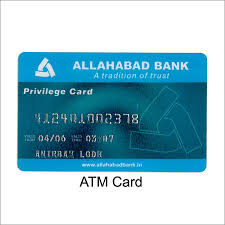
Should Teens Carry an ATM Card?

The thought of your tween or teen armed with an automatic teller machine card might send shivers up your spine. After all, every place that young people go, there tend to be plenty of ATMs: at sports stadiums, concert venues, at shopping malls, and on so many city streets. You might imagine your child out with his or her friends, continually stopping at ATMs all night long so he or she can spend, spend, spend – and worry about the consequences at another time.

That doesn’t mean you should try to block your kids’ access to ATMs until they’re ready to leave for college. ATMs can provide emergency cash whenever your kids are stranded, or whenever they’ve lost a purse or wallet and need to pay for transportation home. What’s more, ATMs can teach them important lessons about monetary usage and about establishing a monthly budget and then sticking to that budget no matter what.

Setting Boundaries for your Teen’s ATM Card

It’s important to sit down with your kids before you hand them an ATM card to discuss restrictions. Just as you assign them a curfew and establish other rules, set limits as to how often they’re allowed to make ATM withdrawals, so as not to drive the cost of their ATM fees too high. Once a week is probably a good number. Also, instruct your kids to only use the ATMs belonging to their bank, again to avoid unnecessary fees. And make sure you review ATM safety guidelines with them, so they can avoid thieves and skimmers.

Sometimes it’s better to test your kids’ spending habits before entrusting them with full ATM privileges. One way to do that is by giving them a prepaid card. A prepaid card is similar to a credit card, but it uses funds that you have already deposited into an account. Every time your child makes a purchase, the amount of that purchase is deducted from the account. Once your child has demonstrated to you that he or she can spend in a responsible, thoughtful manner, and isn’t prone to splurges, you can then upgrade him or her to an ATM card. Be aware that some prepaid cards come with an ATM function, but you can usually disable that function if you want. You should realize, too, that a number of prepaid cards charge high fees.

In some ways, issuing a card for an automatic teller machine makes it easier to monitor your tween or teenager’s spending habits. If your child works, and/or you give her an allowance, then she might be spending a lot of cash without your having the slightest idea of where that money’s going. But if your son or daughter uses an ATM card to get cash as needed, you can have a clearer sense of when and where that money is being spent. Make it a requirement, therefore, that your child bring home all his ATM receipts, just as he does all his report cards. From time to time, leaf through those receipts and make sure there aren’t any huge withdrawals or suspicious locations listed.

By the same token, an ATM card can make a child more careful with cash. Think about it this way: if your child were to attend a concert with a big wad of cash that she’d saved up from her afterschool job, she might be inclined to spend the entire sum on unnecessary souvenirs. But if she has to go up to an ATM and type in a number, knowing that her parents are going to see the receipt, she might well end up spending a lot less money that evening.

Advertisements Vs. ATM Fees

ATM fees are just one of those touchy subjects that can make even the meekest of personalities take a turn and show a wild side. That could be mainly because ATM fees vary so widely from one ATM owner to the next and from one financial institution to the next. This can make it virtually impossible sometimes to get a reasonable grip on what’s fair to outrageous to pay. Of course, for the customer, fees are about paying the lowest amount as possible. But for the ATM owner, fees are an integral part of doing business, so while there is a desire to be reasonable, they must also stay competitive in the market just to stay on level with other ATM institutions.

Creative Advertising

While assessing ATM fees are certainly an important part of doing business, they’re not always welcomed or embraced by customers. There can be a lot of complaining about the rates, and even requests for refunds from customers who may decide to challenge the fee amounts based on several criteria. At any rate, the ATM owner has to become creative at ways to keep his customers happy enough to continue doing business with his establishment. And, at the same time, the owner must try to develop a workable solution that will keep a crucial and much-needed revenue stream coming into his financial business.

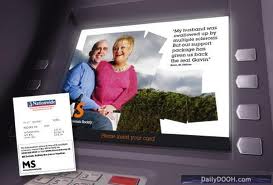
ATM advertising is a possible solution that owners can implement that may help to solve some of the customers concerns. It’s an on-screen video message where the customer agrees to watch a pre-recorded advertising message in return for reduced or an elimination of ATM surcharges. The customer is given this option when they begin making their transaction, so there are no worries that the commercial will just simply “play” for them, without their permission. Infringement on a customer’s time in that way can be annoying, so ATM owners want to be sure be aware of that possibility and offer the customers options.

With this type of marketing and advertising, both the customer and the ATM owner are appeased on different levels; the advertiser for agreeing to play the advertising video compensates the ATM owner, and the customer (possibly) pays a significantly reduced bank fee in exchange for watching the advertiser’s sales pitch. The sales pitch usually won’t take any longer to view than it would to make an ATM transaction, so there is no lengthy, inordinate amount of time spent watching video commercials while standing at the ATM machine. Usually, the ads will be anywhere from 10-30 seconds, just enough time to capture the customer’s attention and make a lasting sales impression.

The ATM owner and the advertiser will work out and negotiate the terms of the advertising contract. They will determine how long, how frequently and what style of commercial is best suited for the machines. Varying factors can determine ad costs, which is why negotiation is crucial. Since this type of advertising is vastly different from print or even television advertising, it’s important to look at the overall marketing package in terms of quality, relevance and style and not just length. For instance, in some cases, the advertiser will need to negotiate the rate based on the length of the commercial, whether it’s 10 seconds or 60 seconds, especially if it’s for a well-known product or brand.

Coupons and More Savings

Another feature that gets the customers attention is the tear-off coupon that’s at the bottom of their banking receipt. These receipts are good for other services or products that are with local businesses in the area, encouraging customers to keep their business with local establishments. This also incentivizes the business owners to place ads with the ATM machines, especially if they’re trying to target a certain demographic or entice the foot traffic that surrounds the area where the ATM is located.

What makes these types of transactions so worthwhile is because the advertisements are targeted specifically to ATM-style audiences, so it’s something (a product or a service) that would interest the customer. The customer does however have the option to “opt-out” of the feature and choose to not watch the videos. If the customer does go this route, they usually will have to agree to pay the ATM fees.